Get Full Government Meeting Transcripts, Videos, & Alerts Forever!
Get email alerts on the Municipal Transparency topic
No spam. Unsubscribe anytime.
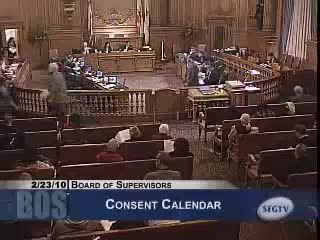
Supervisors fail to override mayor's veto of ordinance on dignitary security cost disclosures
Summary
The Board of Supervisors voted 7-3 on a motion to override a mayoral veto of an ordinance that would have required elected city officers to reimburse the city for dignitary security during campaign-related travel or events. The motion failed because an eight-vote two-thirds threshold was required.
The San Francisco Board of Supervisors on Tuesday voted 7-3 against overriding Mayor's veto of an ordinance that would have required elected city officers to reimburse the city for the cost of dignitary security provided during campaign-related travel or meetings.
Supervisor McCreame, who introduced the override motion, criticized the mayor's veto as an obstacle to transparency. "I think it's, quite unfortunate that the mayor saw fit, to veto this piece of legislation. It is a good government, piece of legislation," McCreame said during debate, arguing the measure was a modest step toward illuminating a previously undisclosed budget and avoiding "phantom budgets."
The ordinance would have required city elective officers to reimburse the city for dignitary security costs related to campaign activities. A "yes" vote on the item would have overridden the mayor's veto; a "no" vote would have sustained it. The roll call recorded seven yes votes and three no votes, short of the eight votes required under charter rules for a veto override. The clerk announced: "This being an item that would have required a two thirds vote of 8 supervisors, the motion fails."
Supporters said the ordinance was not intended to set security minimums or maximums but to create routine disclosure and a process linking the police, the mayor's office, and the Board of Supervisors so the city can "know what it is we spend, how is it we spend, and why," in McCreame's words. Opponents argued for the need to preserve operational confidentiality for law enforcement; several supervisors had previously cited police concerns that disclosure might compromise security assessments.
No further action was recorded on the measure during the meeting.
Ending
The motion failed for lack of the required supermajority. The transcript shows substantive debate focused on transparency in city security budgeting versus operational safety concerns; supervisors opposed to override cited those safety and confidentiality dimensions.