Get Full Government Meeting Transcripts, Videos, & Alerts Forever!
Get email alerts on the Public Health Budget topic
No spam. Unsubscribe anytime.
Board of Supervisors holds public hearing on Department of Public Health midyear cuts as advocates press to save ARC House and trauma program
Summary
The San Francisco Board of Supervisors held a Committee of the Whole hearing Jan. 26 on midyear cuts proposed to the Department of Public Health budget, hearing more than two hours of testimony from providers and residents who urged restoration of funding for ARC House, the Trauma Recovery Center and residential substance‑abuse treatment.
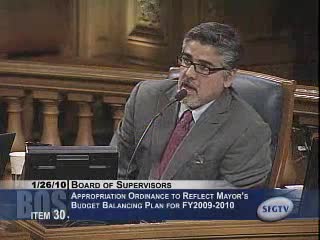
The San Francisco Board of Supervisors held a Committee of the Whole hearing on Jan. 26 to review proposed midyear reductions to the Department of Public Health (DPH) budget, drawing more than two hours of public testimony about cuts that community groups and service providers say would close or reduce critical programs.
The hearing followed an earlier motion to sit as a Committee of the Whole so the board could take extended public comment specifically on the Department of Public Health’s proposed reductions. Supervisors said the hearing was intended to give residents and service providers a public forum to describe the real‑world impacts of potential cuts.
Supervisor John Avalos, who brought the motion, said the hearing was meant to set a precedent for public review when public‑health or substance‑abuse services are in the crosshairs of budget pruning. “Many committee members felt it would be really important that we set a precedent when we do have cuts to our Department of Public Health,” Avalos said.
DPH Director Mitch Katz opened the hearing and described a department working to preserve services with limited dollars. “There are a lot of services that we very much want to provide, more than we're currently providing. And we're just trying to figure out how to do the best we can with the available dollars,” Katz said.
Much of the public testimony centered on two programs threatened in the proposed reductions: ARC House, a transitional housing and support program for LGBT youth run by the Arc of Refuge / City of Refuge, and the Trauma Recovery Center (TRC), which serves victims of violence. Speakers included former and current ARC House residents, program staff and community clergy, who said cuts would leave young people without housing and support.
Representatives of the Arc of Refuge said they have been searching for site control and that a longer‑term solution remains possible but that an immediate loss of program funding would put people on the street. City of Refuge leaders described efforts to identify alternative sites and to reduce the agency’s census while new arrangements are pursued.
TRC Director Dr. Alicia Bousellari described the center as San Francisco’s only comprehensive trauma mental‑health center for victims of sexual assault, domestic violence, shootings and families of homicide victims. She asked supervisors to preserve the program, citing the center’s reported outcomes — higher rates of victims being seen and improved cooperation with law enforcement — and warned that shuttering TRC would remove a program “that restores hope” for severely traumatized clients.
Speakers also pressed the board to preserve residential substance‑abuse treatment slots. Several providers and advocates pointed to Proposition T, the 2008 voter initiative that requires the city to maintain adequate levels of free and low‑cost substance‑abuse services and residential treatment slots. Multiple speakers and supervisors raised legal and procedural questions about whether the administration’s proposed midyear actions are consistent with Proposition T and the administrative code.
Supervisor Jake McCreary (note: transcript labels vary) and others asked the city attorney and controller to review whether reductions in funded substance‑abuse slots would violate the voter‑approved administrative‑code language. The deputy city attorney advised the board that while Proposition T reflects voters’ policy intent, annual and supplemental budget appropriations under the city charter provide the board and the mayor the authority to allocate funds each year; the city attorney’s office and the controller indicated they would review legal questions about implementation and timing.
Several hospital employees — psychiatric technicians and other staff from San Francisco General Hospital — told the board that additional reductions in psychiatric inpatient beds and support staff would increase safety risks for patients and workers. A number of public‑safety and health workers urged supervisors to avoid cuts that would produce downstream costs in emergency care and law enforcement.
After public testimony, supervisors discussed interim actions. The budget committee’s supplemental appropriation ordinance, earlier reviewed and amended in committee, proposed a midyear plan to close a projected $45 million shortfall; the board had restored several line items in committee, including funding for TRC and other programs. During Jan. 26 proceedings the board approved the supplemental ordinance on first reading as amended; supervisors also asked the controller and city attorney for written analyses of how the proposed DPH reductions interact with Proposition T and the administrative code.
Board members said they will use the materials to guide further budget deliberations. Supervisor Campos, who introduced a separate request earlier in the meeting for a limited performance audit of the San Francisco Municipal Transportation Agency, said the board expects legal and fiscal opinions on the DPH reductions before final votes on midyear changes.
The hearing record will be used in budget‑committee follow up and to shape any decisions about whether to restore or reallocate funds when the board votes on final appropriations.