Get Full Government Meeting Transcripts, Videos, & Alerts Forever!
Get email alerts on the Immigration Policy topic
No spam. Unsubscribe anytime.
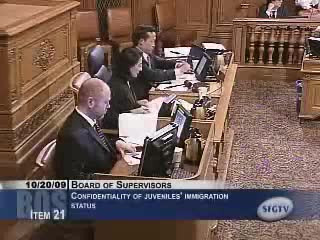
Supervisors pass juvenile-reporting change in first reading amid sanctuary debate
Summary
The Board of Supervisors voted 8-2 on first reading to amend the administrative code to allow city law enforcement to report the immigration status of juveniles only after adjudication in felony cases, a move proponents said protects due process while critics warned of public-safety risks.
The San Francisco Board of Supervisors voted on first reading to amend the administrative code to allow city law enforcement officers and employees to report a juvenile's immigration status to state or federal agencies when the juvenile has been adjudicated by a court on the grounds of felony conduct. The measure passed on first reading by a 8–2 vote following several hours of debate and public testimony.
Sponsor Supervisor David Campos framed the ordinance as an effort to protect due process for youth while preserving law enforcement’s ability to report violent offenders after the court process. “This is not contrary to what has been said — this legislation does allow for the reporting of youth of children who are adjudicated to have engaged in criminal conduct,” Campos said, adding that the measure “tries to strike a balance between two extremes” — not reporting at all, and reporting immediately at arrest.
Campos cited legal precedent in his remarks and noted consultation with the City Attorney’s Office. “City Attorney Dennis Herrera and his office approved this legislation as to form,” Campos told colleagues, and he pointed to legal scholars who told the board they believed the city could defend the change in court.
Supporters said the change would prevent young people who have not been convicted from being referred to immigration authorities. Supervisor Bevan Dufty said the measure was “not a soft-on-crime vote” and argued that referrals that occur only after conviction reduce the risk that charging discretion — which varies — will result in family separations before a judicial determination. “If you are asking if we are gonna tear a family apart... it should not be based on a charging discretion. It should be based upon a conviction,” Dufty said.
Opponents, however, told the board they remained uncomfortable with the change, saying that delaying reporting until after adjudication could hinder public-safety efforts if defendants did not complete the adjudication process or failed to appear in court. Several supervisors said they had wrestled with the trade-offs; one said the decision caused “sleepless nights.” Supervisor Chu said she remained unconvinced that the city could ensure juveniles would always complete the adjudication process.
Public testimony filled the chamber and overflow rooms. Hundreds of students, immigrant-rights advocates and faith leaders attended in support of the change; law-enforcement and victim-advocate witnesses also testified at the public-safety committee earlier in the week.
The ordinance passed on first reading 8–2. Under the city’s legislative process, the change returns to the board for a subsequent reading and final vote. Supporters said they expect the item back for second reading with the City Attorney’s office continuing to refine the ordinance language.
Why it matters: The amendment changes the timing of when immigration reporting may occur for juvenile offenders, shifting the city’s policy toward reporting after formal adjudication for felony-level conduct. Proponents say the change protects basic due-process principles for young people; opponents and some law-enforcement voices warned about possible unintended public-safety consequences if youths do not complete court processes.
What’s next: The item was adopted on first reading and will return to the board for a final vote. The City Attorney’s Office is the lead on any legal refinements and the language for the final ordinance.