Get Full Government Meeting Transcripts, Videos, & Alerts Forever!
Get email alerts on the Traffic Safety topic
No spam. Unsubscribe anytime.
Supervisors send Addison Street speed-hump request to MTA, set two-month check-in
Summary
The San Francisco Board of Supervisors referred a resolution asking the Municipal Transportation Agency to study and pursue speed humps or cushions on Addison Street to committee with a two-month timeline for follow-up, after residents and the sponsoring supervisor raised safety concerns tied to steep grades and speeding.
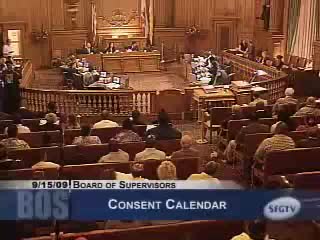
The San Francisco Board of Supervisors on Sept. 15 referred a resolution asking the Municipal Transportation Agency (MTA) to take a closer look at installing speed humps or speed cushions on Addison Street and directed the matter to the City Operations and Neighborhood Services Committee for consideration within two months.
Supervisor Ross Dufty, who sponsored the resolution, told the board that Addison Street in Diamond Heights has a long history of speeding, “because of the grade of the street,” and that residents — including many seniors and families with children near a playground — have asked for stronger traffic-calming measures, beyond paint and narrowings the MTA has already used. Dufty said a traffic circle at Digby has been completed, but neighbors remain worried about “reckless driving” and speeding on the steep block.
Supervisor Elsberg said he agreed speed humps could be appropriate but opposed the resolution as a policy vehicle because it could be used to request many such installations across the city; he cited the MTA charter change voters passed in 2007 that centralized traffic-calming decisions at the MTA. Supervisor Aaron Peskin (spoken as supporting Supervisor Dufty during the hearing) and others said neighborhood knowledge matters and supported referring the measure in order to press the agency to work with neighbors.
Judson True, an MTA staff member, told the board the agency was “open to looking at creative solutions” and had been working with Dufty’s office and neighbors. He said the MTA historically limits speed humps on streets that do not meet certain engineering criteria because of potential problems for emergency response vehicles and people with disabilities, and because a bus route runs on Addison; but True said the agency agreed to meet with neighbors in the next four to six weeks to review options.
After discussion, Supervisor Dufty moved to refer the resolution to committee and asked that the committee consider it within two months. The motion was seconded and passed without objection.
Why it matters: The resolution does not itself require the MTA to install humps; it asks the board to press the agency to examine whether cushions or other traffic-calming measures can work on a steep residential street where residents say existing treatments have not reduced speeds. The committee referral sets a two-month timeline for the MTA and the sponsoring office to report back with next steps.
What happens next: The resolution was referred to the appropriate committee for consideration within two months; the MTA and neighborhood representatives planned a meeting with neighbors. If the committee wants further action it can request follow-up from the agency or bring additional proposals back to the full board.
Votes and procedural outcome: The board approved the motion to refer the resolution to committee for consideration within two months by unanimous voice/consent during the meeting.