Get Full Government Meeting Transcripts, Videos, & Alerts Forever!
Get email alerts on the Energy Policy topic
No spam. Unsubscribe anytime.
Supervisors pass first reading of ordinance urging closure of Potrero Power Plant
Summary
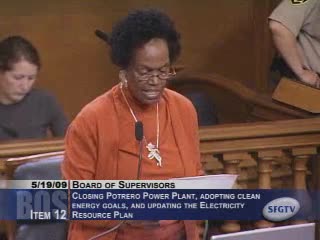
The Board of Supervisors passed on first reading an ordinance urging the closure of the Potrero Power Plant and directing an update of the city’s electricity resource plan; supporters said the measure advances San Francisco’s long-standing goal of decommissioning the fossil-fuel plant.
The San Francisco Board of Supervisors passed on first reading an ordinance that reaffirms city policy to pursue closure of the Potrero Power Plant and calls for an updated electricity resource plan.
Supervisor Maxwell, the legislation’s sponsor, told colleagues the ordinance advances a two-tiered effort: near-term steps to close Potrero Hill Unit 3 by the end of the year and remaining units by the end of the next year, and a broader update of the city’s electricity resource plan (last updated in December 2002). Maxwell said working-group meetings involving the Public Utilities Commission, PG&E technical staff, and community stakeholders informed the proposal and that she had made non-substantive amendments to reflect recent communications with the California Independent System Operator (Cal ISO) and to move specific energy targets into the electricity resource plan process.
Supervisor Maxwell asked for support for the amendments and thanked colleagues for cosponsorship. Without objection, the ordinance passed on its first reading.
The ordinance directs city agencies to continue technical work and stakeholder engagement to evaluate the feasibility and timing of plant closures and to update the electricity resource plan to reflect both reliability requirements and the city’s energy goals.
Because the ordinance passed on first reading, further hearings or readings are required before final adoption.