Get Full Government Meeting Transcripts, Videos, & Alerts Forever!
Get email alerts on the Transit Budget topic
No spam. Unsubscribe anytime.
Board delays vote on SFMTA budget after heated debate over fare hikes and parking revenue
Summary
The San Francisco Board of Supervisors debated the San Francisco Municipal Transportation Agency's proposed fiscal year 2009–2010 budget and voted to continue consideration to a special meeting after supervisors and community advocates pressed the agency for alternatives to fare increases and service cuts.
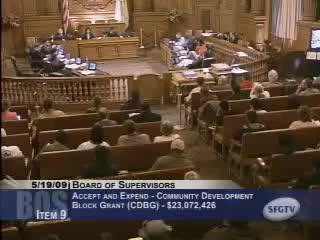
San Francisco supervisors on the Board of Supervisors on Tuesday debated whether to reject the San Francisco Municipal Transportation Agency’s proposed fiscal year 2009–2010 budget, ultimately voting to continue the item to a special meeting to allow more negotiations and information-gathering.
Supervisor Avalos urged the board to reject the budget, saying the proposal “has been balanced disproportionately on the backs of riders” and urging the board to press the MTA for alternatives to fare increases and service cuts. He said community groups across the city had helped craft an alternate package that would reduce the burden on transit-dependent riders.
The debate centered on how to cover an approximate $13 million shortfall that SFMTA staff and the agency’s executive director described. Nathaniel Ford, SFMTA executive director, told the board that the agency faced roughly $13 million in added fiscal pressure driven by a failed SEIU ratification (about $3 million), other labor negotiations (about $3 million), and potential state budget impacts on local general fund revenues (about $7 million). Ford said the agency’s plan includes fare increases, service reductions and parking-rate and meter enforcement changes; the budget also contemplates reducing workforce levels by about 450 positions.
Supporters of rejecting the budget argued that the fare increases and service cuts would fall most heavily on seniors, youth and low-income residents and that more revenue options — including parking-rate changes and other city-level allocations — should be pursued. Supervisor Daly and others praised Avalos’s effort and said the board should use its influence to press the MTA to identify revenue that would allow rollback of fare increases.
Ford responded that staff had worked on the budget since January and that the agency had already reviewed parking-rate options and planned a scope of work for a parking study. He told the board that the MTA board had decided not to include a proposal to expand evening and Sunday meter enforcement (which staff estimated could raise approximately $9 million) and that any changes to parking policy would require consultation with the board, the mayor’s office and the MTA board before implementation.
Supervisors repeatedly raised governance and oversight questions, including the degree of influence from the mayor’s office (referred to as “Room 200”) on the agency’s decisions and whether charter changes to MTA board appointments should be considered. Multiple supervisors said they wanted a broader discussion about the long-term funding and independence of the transit agency.
After extended discussion and testimony from supervisors and community advocates, Supervisor McRemy moved to continue the item to a special meeting, with Supervisor Daley seconding. On a roll-call vote to continue to Wednesday, May 27, at 12:00 p.m., the board recorded 7 ayes and 4 noes; the motion to continue passed.
The continuation leaves the MTA budget unresolved at the full board level while staff and supervisors pursue more detailed revenue and cost options, including further study of parking changes, potential general-fund tradeoffs, and labor-negotiation outcomes.
Votes at a glance: the continuance motion passed 7–4 (Mercarimi—aye; Alioto Pier—no; Avalos—aye; Campos—aye; President Chu—aye; Chu—no; Daley—aye; Dufty—no; Ellsberg—no; Marr—aye; Maxwell—aye).