Get Full Government Meeting Transcripts, Videos, & Alerts Forever!
Get email alerts on the Budget Election topic
No spam. Unsubscribe anytime.
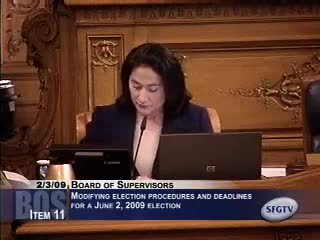
Supervisors approve steps toward June special election on revenue measures
Summary
The Board advanced an amended set of items allowing consideration of possible revenue measures for a June 2 special election, including a vehicle fee, a possible carbon tax and a charter amendment; the resolution calling the election passed 8–3.
The San Francisco Board of Supervisors voted to advance an amended item and later adopted a resolution calling a municipal special election on June 2, 2009, to consider potential revenue and fiscal measures.
At issue were procedural changes and the addition of three measures that had not previously had a public hearing: a possible vehicle impact fee, a possible tax intended to discourage consumption of high‑carbon‑footprint energy (referred to in the meeting as a carbon tax), and a proposed charter amendment to require that one‑time revenues be spent only on one‑time expenditures.
Supervisors debated whether the city had completed the preparatory work needed to present revenue measures to voters in June. Supervisor Maxwell and others urged caution, noting more work remained before placing measures on the ballot. Maxwell said more needs to be done “before we move forward with the June special election,” and argued for additional planning and stakeholder engagement.
Other supervisors argued the city must keep options open, given the depth of the fiscal crisis. Supervisor Dufty described a three‑part approach of cuts, concessions and revenues as necessary, saying the public would be more likely to support a balanced package. “The only way we're gonna solve the city's fiscal situation is to have a 3 part approach,” he said.
Supervisor Avalos introduced two additional revenue proposals during roll call and introductions later in the meeting: a gross receipts tax (with an exemption for firms under $2 million in receipts) and a proposed 5 percent sales tax set to expire after three years, which Avalos estimated could generate about $2.525 billion (her estimate presented on the record). Avalos said the sales‑tax measure would be dedicated to public safety and public health services.
After amendments and procedural votes, the board adopted the ordinance amending deadlines and the package of items that included the three new measures, and then separately adopted a resolution calling the June 2 special election (item 12). The resolution passed with eight ayes and three noes (8–3). Board members said the votes to move forward did not commit the city to a final package; supervisors and staff will continue drafting language, stakeholder outreach and budget analysis ahead of the June ballot deadline.
What happens next: staff and committee work to refine proposed measures, and supervisors said the mayor’s office, labor and business stakeholders should be engaged as the city prepares possible ballot measures for June.