Get Full Government Meeting Transcripts, Videos, & Alerts Forever!
Get email alerts on the Planning 300 Grant topic
No spam. Unsubscribe anytime.
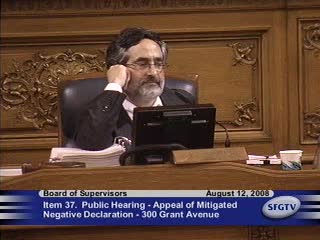
Board denies appeal and upholds mitigated negative declaration for 300 Grant Avenue project
Summary
After public testimony about shadowing and historic‑district compatibility, the Board of Supervisors voted to uphold the Planning Department’s mitigated negative declaration for a proposed development at 300 Grant Avenue and denied the appeal.
The San Francisco Board of Supervisors on Aug. 12 denied an appeal and upheld the Planning Commission’s earlier decision to adopt a mitigated negative declaration (MND) for a proposed mixed‑use development at 300 Grant Avenue.
Appellants, including condominium residents at 333 Grant represented by attorney Sue Hester, argued the environmental document failed to analyze shadow impacts adequately, especially given the project’s potential to use maximum allowable heights and exceptions under the planning code. Residents showed photographic evidence and urged more detailed graphic shadow analysis for protected sidewalks and private open space.
Planning Department staff (Noni Terrell) and planning consultants (Charles Bennett of ESA) told the board the department analyzed shadow, wind and transportation under a worst‑case scenario and that the record supports the MND conclusions. The department stated the project as studied would not shade private open space at 333 Grant and that shadow timing differences were included in the analysis. Project representatives also described multiple design reductions and facade refinements they said reduced potential environmental impacts since the initial study.
Supervisor Ellsburn moved to approve the planning department’s action to affirm the MND (Item 38) and to table the opposing motions; the motion carried by roll call and the appeal was denied. The board’s action affirms the Planning Department’s conclusion that the proposed development would not cause significant, unmitigated environmental impacts under CEQA.
Why it matters: The decision allows the project’s environmental finding to stand and clears a key procedural hurdle for the developer. Appellants argued the decision implicated wider practice about variable height limits and sunlight protections in downtown conservation areas; staff countered that the environmental record contains the necessary analyses.
What happens next: With the appeal denied, the project may proceed to the next planning and building steps consistent with planning‑code requirements and any conditions identified in the record.