Get Full Government Meeting Transcripts, Videos, & Alerts Forever!
Get email alerts on the Municipal Employee Overtime topic
No spam. Unsubscribe anytime.
Board approves overtime limit ordinance on first reading after amendment
Summary
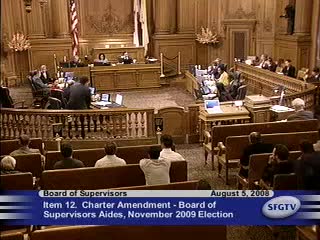
On Aug. 5 the San Francisco Board of Supervisors passed on first reading an ordinance that sets a formal cap on regular overtime hours for most city employees, after adopting an amendment and a technical wording fix.
San Francisco — The Board of Supervisors passed on first reading an ordinance amending the Administrative Code to limit regular overtime hours after adopting an amendment that narrows an earlier version and a subsequent technical correction to the ordinance title.
The ordinance as introduced would have set a numerical ceiling on overtime hours and required monthly reporting by the Controller’s office and periodic reviews. Supporters said the measure aims to reduce worker fatigue, safety risks and high overtime expenditures; opponents warned it could interfere with departments’ ability to meet operational needs.
Nikki Callahan, director of the Department of Human Resources, told the board the department worked with the mayor’s office and labor unions while drafting changes and that the office intends to continue education and oversight efforts. “We have, with respect to this ordinance, working with the supervisor in the mayor’s office, we have engaged in meet and confer with the labor unions who are involved,” Callahan said, adding that departments with varied labor contracts might need follow-up discussions.
Supervisor Ellsberg moved an amendment to exclude overtime work that results in no additional city cost and that does not generate compensatory time — for example, work paid entirely by other entities — arguing those situations should not count toward the cap. The board adopted that amendment by roll call, 6–5 (aye votes: Aleutta Pier; Chu; Dufty; Ellsburn; Peskin; Sandoval; no votes: Ammiano; Daley; Maxwell; McGoldrick; Mercarini), and later the ordinance as amended passed on first reading with 11 ayes.
Following passage the board approved a technical correction to the ordinance title to replace a numeric reference (changing an earlier displayed number from 80 to 40 in the title line) to reflect the intended text. That procedural change was handled by a subsequent motion to rescind and amend the title for clarity.
The ordinance requires monthly reports to a fiscal committee of the Board and twice-yearly in‑depth analyses to track overtime usage, with the Controller’s office and Human Resources playing defined roles in oversight. The board retained language that allows exceptions where critical staffing shortages exist and includes procedures for distribution of overtime in accordance with existing seniority and assignment rules.
Supporters emphasized safety and the quality of work, saying the measure will force better management of staffing and overtime distribution. Critics cautioned about unintended impacts on public safety operations and said the language may need further refinement in committee and in labor negotiations.
The item passed on first reading as amended and will return for a second reading and final adoption vote at a later meeting.