Get Full Government Meeting Transcripts, Videos, & Alerts Forever!
Get email alerts on the Public Safety Police topic
No spam. Unsubscribe anytime.
Supervisors expand foot-patrol pilot, send ordinance back to committee
Summary
The Board of Supervisors voted to amend a one-year foot-patrol pilot and re-refer the ordinance to committee after debate about staffing, resources and scope.
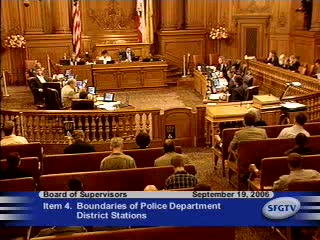
The San Francisco Board of Supervisors on Tuesday voted to amend a one-year pilot program to restore foot patrols in specified police districts and re-referred the ordinance to committee for further work.
Supervisor Mercarini introduced an ordinance to create a one-year foot-patrol pilot in crime-impacted areas served by the Park and Northern police districts. The measure required reporting and a review of effectiveness; Mercarini said the proposal responds to San Franciscans’ calls for a more visible police presence.
The board debated a substantial amendment offered by Supervisor Daley to expand the pilot beyond Park and Northern stations to include the Tenderloin, Mission and Ingleside stations. Daley said the amendment would require each named station’s officer in charge to “assign no fewer than one officer in two of the three daily watches, for a total of two officers for a 24-hour period, to walk a foot beat.” Daley made the motion to adopt that language; Supervisor Ammiano seconded it. The amendment passed on a roll call vote, 5 ayes to 4 nos.
Chief Heather Fong, who appeared before the board, described footbeat staffing as an existing departmental priority. “Footbeat staffing is a priority in our department,” she told supervisors, and described current staffing patterns and two academy classes scheduled to graduate in the coming months. The chief said the department is examining how to maximize existing beat staffing and will work with the board on implementation plans.
Budget analyst Mr. Rose said he had not conducted a full analysis and recommended the board ask staff to clarify current staffing and what would change if officers were reassigned to foot beats. “My initial take on this is that there would be sufficient resources in the department to do as you say,” Rose said, while recommending a focused analysis of current deployments and potential service impacts.
Several supervisors urged collaboration between the mayor’s office, the police commission, and the department. Concerns raised during discussion included potential service impacts elsewhere in the city, retirements and attrition among officers, and the need to tie any staffing changes to the department’s recruitment and retention plans.
Because supervisors indicated they wanted to accommodate Daley’s language and other suggested amendments, the board re‑referred the item to committee as amended so staff and stakeholders could refine implementation details and assess fiscal and service impacts.
Votes and immediate next steps: the Daley amendment passed 5–4 (ayes: Supervisor Peskin; Supervisor Sandoval; Supervisor Ammiano; Supervisor Daley; Supervisor Mercarini — nos: Supervisor Ellsberg; Supervisor Ma; Supervisor Maxwell; Supervisor McGoldrick). The ordinance was re‑referred to committee as amended. The chief and budget office were directed to work with supervisors on staffing and implementation details for the committee hearing.