Get Full Government Meeting Transcripts, Videos, & Alerts Forever!
Get email alerts on the Davies Neurosciences Eir topic
No spam. Unsubscribe anytime.
Supervisors reverse planning decision, order environmental review for Davies neurosciences project
Summary
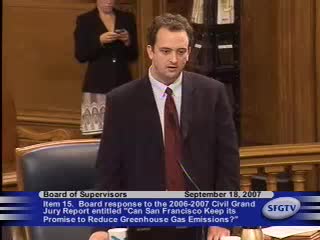
The San Francisco Board of Supervisors voted Sept. 18 to reverse a Planning Commission decision and require a fuller environmental review of a proposed neurosciences building at the California Pacific Medical Center Davies campus, directing staff to prepare findings supporting the reversal.
The San Francisco Board of Supervisors on Sept. 18 voted to reverse the Planning Commission’s approval of a mitigated negative declaration for a proposed 50,000‑square‑foot neurosciences institute at California Pacific Medical Center’s (CPMC) Davies campus and directed the clerk to prepare findings supporting that reversal.
Lede and result: The board concluded there is substantial public concern and a record of evidence warranting a fuller environmental review. On the motion to reverse the Planning Commission’s adoption of the mitigated negative declaration and to direct the clerk to prepare findings, the board approved the motion by roll call 7 ayes and 3 noes. The reversal means the city will prepare an environmental impact report (EIR) rather than rely on the mitigated negative declaration that had been issued by planning staff.
Why it matters: Appellants and neighborhood groups argued the project had not been evaluated in the context of CPMC’s broader multi‑campus planning, and raised specific concerns about air quality (diesel particulate matter during construction), traffic and parking, housing demand, and cumulative impacts citywide. Appellants urged that those impacts be assessed in a programmatic EIR that would look across CPMC’s campus plans rather than in a lesser negative declaration for a single building.
Appellant's case: Counsel for the appellants, John Marshall, told the board the question was whether the project should be wrapped into CPMC’s larger master‑plan EIR rather than evaluated as an isolated project. "The better course of action is to address that in the master plan EIR," Marshall said, urging a more comprehensive review of air quality, traffic and housing impacts and the cumulative effects of projects on multiple CPMC campuses.
Planning staff and sponsor response: Michael Jacinto of the Planning Department summarized staff’s review: the project is an urban infill medical office building on a previously developed site; staff prepared an initial study and concluded mitigation would render impacts less than significant. The Planning Commission had upheld that determination on June 7, 2007. CPMC counsel Tay Via and hospital chief Martin Brotman argued the project responds to a documented clinical need and that a separate EIR is not required. Brotman said the project "is right. This project is ready" and stressed timing and patient needs.
Public testimony: The board heard hours of public comment from labor unions, neighborhood associations, patients and clinicians. Supporters included medical staff and patient advocates who described cramped clinic conditions and the benefits of a consolidated neurosciences institute; opponents and appellants stressed cumulative impacts, construction‑period diesel and particulate exposures, traffic and parking, and the need for a multicampus programmatic review.
Board decision and vote: After hearing testimony and deliberating, Supervisor Ammiano moved to adopt the motions reversing the Planning Commission’s approval of the mitigated negative declaration and to direct the clerk to prepare findings in support of that reversal; the motion passed on roll call (7 ayes, 3 noes). The votes recorded in the roll call were: Ayes — Supervisors Ammiano, Daly, Maxwell, McGoldrick, Mercarimi, Peskin, Alioto‑Pier; Noes — Supervisors Ellsberg, Jew, Sandoval; Supervisor Dufty was excused for this matter. The board’s action requires the city to prepare a full EIR or otherwise proceed with a programmatic environmental review to address the asserted significant or potentially significant impacts.
What the EIR will examine: The appellants specifically requested independent review of diesel particulate matter from construction (PM2.5 and diesel particulate health risk), cumulative traffic and parking effects (including impacts from any removal of on‑street parking), noise during construction, tree removal and habitat effects, and potential housing impacts tied to workforce and displaced uses across campuses. The EIR process will allow staff, stakeholders and outside experts to evaluate mitigation measures and alternatives across campuses.
Next steps and timing: The board directed the clerk to prepare findings implementing the reversal. Preparing a project‑level EIR or a programmatic master‑plan EIR typically takes many months and will include a public scoping period and formal opportunities for comment. CPMC representatives and planning staff noted the institution is also engaged in longer‑range master planning for its campuses, and the EIR process should be coordinated with that work.
Ending: The board’s vote reflects the supervisors’ conclusion that the project’s impacts deserve a fuller environmental study and public record. Supporters of the neuroscience institute said the decision will delay an urgently needed clinical facility; opponents said the additional review will ensure the broader impacts on neighborhoods and public health are properly evaluated.