Get Full Government Meeting Transcripts, Videos, & Alerts Forever!
Get email alerts on the Transit Advertising Contract topic
No spam. Unsubscribe anytime.
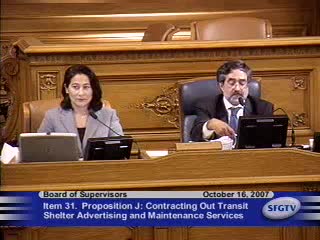
Board approves transit-shelter deal with Clear Channel after detailed amendments and assurances on maintenance, finance reporting
Summary
The Board approved a long-term transit-shelter and advertising agreement that will replace shelters citywide, raise guaranteed revenues and require annual audited financial reporting; members pressed MTA on maintenance standards and public-review of experimental ads.
The San Francisco Board of Supervisors approved a negotiated transit-shelter and advertising agreement with Clear Channel Outdoor that replaces the city's aging shelters, increases maintenance requirements and guarantees substantial revenue to the Municipal Transportation Agency (MTA).
MTA General Manager Mr. Ford told the board the negotiated contract replaces roughly 1,100 shelters and 39 kiosks with solar-powered shelters and expanded maintenance; Clear Channel will pay a $5 million up-front amount, a minimum annual guarantee projected to average roughly $12.7 million per year over a 15-year term (with a five-year option) and additional annual payments to offset administrative and arts-commission costs. The contract includes liquidated damages, a performance bond and a $2 million letter of credit per year.
Supervisors pressed MTA staff on multiple fronts: how revenues would be used, whether the contract would allow ‘‘experimental’’ advertising and how to ensure public safety and neighborhood standards. Ford said experimental advertising would require a public-hearing process and MTA board approval; staff also pledged that the bike-sharing option and canopy-over-subway options would be negotiated separately and would not reduce the minimum guaranteed revenue for transit shelter advertising.
Supervisor McGoldrick lauded staff for negotiating protections and for a conservative revenue range the legislative analyst had estimated; he noted the agreement's near-term benefit to Muni finances and emphasized the need to direct funds to operations and maintenance. Supervisor Amiano — wary of Clear Channel's national record on labor and commercial practices — asked whether the work could be done in-house; Ford and MTA staff said the capital investment and advertising management made contracting more feasible and that the union leadership had been engaged in discussions.
The agreement requires Clear Channel to inspect each shelter at least twice weekly (up to three times in some locations), remove graffiti and make repairs promptly, and it contains enforcement provisions including liquidated damages and termination rights for failure to meet standards. The contract also requires Clear Channel to submit annual audited financial reports and to make financial data available for agency inspection so the MTA can confirm compliance with minimum-guarantee payments; the city attorney said some commercially sensitive material might be claimed as trade secret but that much of the financial reporting would be public and subject to audit.
On roll call, the board approved the ordinance and the MTA resolution (9 ayes, 1 no). Supervisors asked the MTA to provide further detail about how revenue will be used in the upcoming budget process and for ongoing reporting to the board on maintenance and safety outcomes.
(Notes: Items before the board were the transit-shelter advertising agreement and a companion MTA concurrence; discussion included oversight, audit and potential impacts on bike-sharing and canopy options.)