Get Full Government Meeting Transcripts, Videos, & Alerts Forever!
Get email alerts on the Transportation Governance topic
No spam. Unsubscribe anytime.
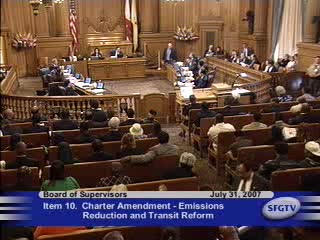
Board narrowly votes to put Muni charter reform on ballot amid parking and governance dispute
Summary
The Board of Supervisors voted to submit a charter amendment to reform the Municipal Transportation Agency’s governance and funding framework to the ballot after heated debate over changes to parking policies and board authority.
The San Francisco Board of Supervisors voted to submit a proposed charter amendment addressing Municipal Transportation Agency (MTA/Muni) governance and funding to the November ballot after extended debate and public testimony from labor unions, transit advocates and business groups.
Supporters—led in public testimony by numerous labor unions representing Muni workers—called the proposed charter change a necessary step to stabilize the agency’s finances and improve service. Labor unions and community groups told the board they had negotiated language they could live with and said the measure would add stable funding and create governance tools to improve performance.
Opponents and some board members raised concerns that the version before the board shifted significant authorities to an appointed board and reduced the Board of Supervisors’ control over certain parking revenues and policy decisions. Opponents also argued the change would decrease accountability by centralizing decisionmaking in an appointed rather than an elected body.
A focal point of contention was the charter amendment’s treatment of parking meter and off‑street parking revenues. Several speakers, including business groups, said the proposal would divert funds away from neighborhood parking projects and that certain parking decisions would be difficult to reverse under the amended charter. Supporters responded that stable transit funding—and clearer funding pathways—were essential to restore service and that the amendment sought a balanced approach that included pedestrian and bicycle priorities.
The board’s session included several procedural moves: a motion to rescind an earlier vote briefly complicated the timetable, and supervisors asked clarifying questions about labor-management components, budget thresholds and the scope of powers an appointed MTA board would hold. Public testimony included many union leaders urging passage, as well as business and neighborhood representatives who urged delay or revision.
Following debate, the board voted to submit the charter amendment to the ballot. The roll call recorded a majority sufficient to place the measure before voters. Supporters said submission does not end oversight, and several supervisors sought minor amendments or additional safeguards before or after submission. Detractors said they would continue to press for changes to preserve supervisory oversight of parking and larger budget levers.
The board also discussed procedural timing for other ballot measures and related campaign and placement issues. The measure’s final text for the ballot will be prepared and published as required by the elections office; supervisors indicated they expected additional public discussion before the measure appeared before voters.