Get Full Government Meeting Transcripts, Videos, & Alerts Forever!
Get email alerts on the Budget Health Cuts topic
No spam. Unsubscribe anytime.
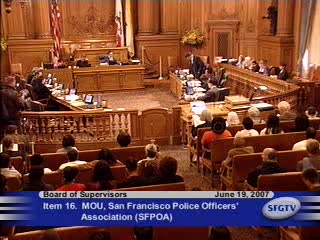
Hundreds testify at Bielenson hearing as supervisors weigh proposed public-health cuts
Summary
More than 200 people testified at the state-required Bielenson hearing on proposed cuts to the Department of Public Health; supervisors and the health commission questioned mayoral cuts to substance abuse, HIV, mental-health and homeless services.
The Board of Supervisors held a mandated Bielenson hearing on proposed reductions in the Department of Public Health budget and heard extended public testimony from program providers, clients and city commissioners.
Supervisor Daly opened the public hearing with a forceful critique of the administration's proposed reductions to substance abuse, HIV, mental health and homeless services, arguing the cuts were unnecessary in a budget year with increased overall appropriations and saying the proposals amounted to "a charade" that forced constituents to return repeatedly to restore vital services. He urged his colleagues to reject the mayor's cut list.
Health Commission members and department staff described programs at risk and urged that back-filled items previously restored by the board be retained in this budget. Health Commissioner Jim Ilig told the board that the commission had rejected most of the proposed cuts at its April hearing and that the commission's responsibility was to protect the safety net.
Provider testimony ran through an extended list of programs that would be affected if the mayor's cuts were adopted: residential and outpatient substance-abuse treatment (including Walden House, Redwood Center, Jellani House and other residential programs), the stimulant treatment outpatient program (STOP), methadone maintenance access, the DOPE overdose prevention project (naloxone distribution), Buster's Place (a 24-hour drop-in service), HIV/Ryan White services, public-health nursing (home visits/home health), Edgewood residential treatment for children and associated kinship services and many SRO collaborative tenant services. Speakers included program directors, clinicians, clients who said treatment had saved their lives, and union and advocacy representatives who urged restoration of the cut funds.
Health department staff and advocates repeatedly warned that cutting prevention, outpatient and harm reduction services would increase downstream expenses and public-safety costs (emergency rooms, jail, inpatient psychiatric stays) and would be counterproductive. The Health Commission asked the board to restore more than $6 million in cuts the commission believed would undermine the public health safety net.
The hearing did not end in a final vote; supervisors directed that the budget committee and the mayor's office continue to work on adjustments during the budget process. Many speakers urged the board to restore specific program funding.
Why it matters: The Bielenson hearing brought substantial public testimony about the human consequences of proposed reductions, especially for substance abuse treatment, homeless services and the safety net for people living with HIV. Board members signaled strong interest in restoring many of the items during budget committee deliberations.
What the public said: Program directors and clients testified that long-term treatment, harm reduction (needle exchange, naloxone), drop-in centers and residential beds have measurable community benefits and that cuts would cause real harm and increased long-term city costs.
Next steps: The budget will be addressed in committee; supervisors indicated they intend to consider restoring many of the public-health items as part of the boardbudget amendments.