Get Full Government Meeting Transcripts, Videos, & Alerts Forever!
Get email alerts on the Housing Affordability topic
No spam. Unsubscribe anytime.
Board advances changes to inclusionary housing rules, adopts differential requirement for high-rise projects
Summary
The board amended and passed on first reading changes to residential inclusionary affordable housing rules that update section 3.15 of the Planning Code, including a lower requirement (12%) for projects over 120 feet that do not request zoning changes and an updated in-lieu fee schedule.
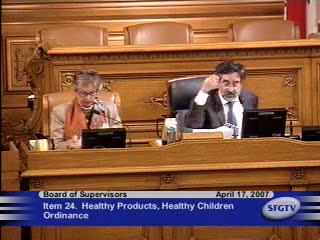
The Board of Supervisors advanced an ordinance on April 17 amending the city’s inclusionary housing rules by revising Planning Code section 3.15 and related provisions. The item passed on first reading after the board accepted a technical cleanup and approved a divided question about the inclusionary percentage for certain high-rise projects.
Supervisor McGoldrick, the ordinance’s author on the floor, asked the city attorney to present a technical amendment to remove language requiring periodic 50-year updates to affordability covenants; Deputy City Attorney Susan Cleveland Knowles described the change as a “technical cleanup” intended to correct language left over from a committee amendment. The council adopted that technical amendment without objection.
The more substantive debate centered on a divided question offered by Supervisor Daly that would change the inclusionary percentage for buildings over 120 feet that do not seek a zoning change to a lower range (12%–17%) than the 15%–20% approach applied elsewhere. Doug Shoemaker, representing the housing staff who advised the board, explained the rationale from a technical advisory group and feasibility study: "The study showed... adopting a new in-lieu fee schedule and a 15% inclusion area would not be feasible for buildings over a certain height" and "for these high rise buildings that don't get any sort of zoning changes at all, that they uniformly be set at 12%." He added that, as part of the package, the city would raise the in-lieu fee schedule (he estimated the in-lieu fee would be “anywhere between 15–20% above today's level”), and that area plans with rezoning would be analyzed separately.
After floor debate, the board voted on the divided question and recorded the portion as passing on first reading (roll-call tallies in the minutes show the divided portion carried with 10 ayes and 1 no). The full ordinance then passed on first reading by the same recorded margin.
The ordinance package includes multiple implementation details: a revised in-lieu fee schedule to be adopted by the Planning Commission, updated area-median-income (AMI) definitions to reflect San Francisco conditions, and provisions to calibrate inclusionary requirements during future area-plan rezonings (for example, Market Octavia). The city record and speakers also cited prior technical advisory committee work and a 2006 inclusionary housing feasibility study as background for the changes.
Votes: the divided question regarding the 120-foot threshold and reduced percentage passed on first reading as recorded (10–1); the overall ordinance passed on first reading with the same tally. Follow-up steps include adoption of the updated in-lieu fee schedule and feasibility analyses tied to area plans; the ordinance will return for subsequent readings and any required administrative implementing actions.
Note: the transcript includes references to dollar-per-square-foot feasibility breakpoints discussed in committee (administration figures in the $18–$20/sq ft range versus developers’ proposed figures around $25/sq ft) and the transcript captures staff testimony that larger projects require longer development periods, which affects feasibility and land economics.