Get Full Government Meeting Transcripts, Videos, & Alerts Forever!
Get email alerts on the Procurement topic
No spam. Unsubscribe anytime.
Board amends and advances recycled-content materials rule amid contracting concerns
Summary
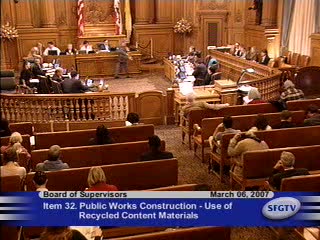
Supervisors amended an ordinance to require recycled-content materials in city construction to the maximum extent feasible, debated procurement and contractor capacity, and approved the amended ordinance on first reading (9–2).
The Board of Supervisors amended and passed on first reading an ordinance requiring that recycled-content materials be used “to the maximum extent feasible” in city construction and improvements. The ordinance includes a technical amendment narrowing the definition of “feasible” to align with the California Building Code and availability, price comparability and project timelines.
Deputy City Attorney Cheryl Adams explained the technical amendment on the floor, saying it refines the definition of feasible so that recycled materials must meet building-code or other adopted standards, be permitted under federal, state and local law, be available within a project timeline and be comparable in price to virgin materials.
Supervisor Jake McGoldrick and others supported the environmental intent. Supervisor Sean Ellsburn (Elsburn in transcript) and Supervisor Maxwell warned that adding new procurement requirements while the city is addressing problems in bidding and contracting might reduce bidder pools and increase costs. Ellsburn said the budget analyst’s audit of the Department of Public Works showed procurement problems and that it may be premature to layer new mandates onto a system already struggling to attract bidders. Maxwell echoed concerns about bid clarity and payment practices but said the goals were laudable.
Nut graf: The ordinance aims to increase use of recycled materials in city projects but includes a narrowed “feasible” standard to reduce legal or procurement risk. Supporters framed the change as an environmental improvement; skeptics cautioned that procurement and bidding problems must be addressed in parallel.
Procedurally, the item returned from committee with a technical amendment missed in the packet; the deputy city attorney and supervisors moved and approved the amendment and then moved the ordinance forward on first reading. The roll call recorded nine ayes and two noes.
Ending: The Board advanced the measure to the ordinance process with a clarified feasibility standard; further committee or second-reading action will follow before final adoption.