Get Full Government Meeting Transcripts, Videos, & Alerts Forever!
Get email alerts on the Land Use And Housing topic
No spam. Unsubscribe anytime.
Board of Supervisors overturns Public Works on 1170–1180 Green Street parcel map, upholding appeal
Summary
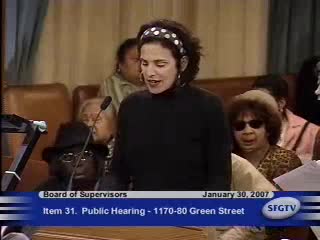
The San Francisco Board of Supervisors on Jan. 30 voted to deny the Director of Public Works’ tentative parcel map for 1170–1180 Green Street, siding with appellants who argued the work is a condo conversion rather than exempt "new construction."
The San Francisco Board of Supervisors on Jan. 30 voted to deny the director of the Department of Public Works’ tentative parcel map determination for 1170–1180 Green Street, siding with community appellants who argued the project is a condo conversion rather than exempt "new construction." The vote came after a lengthy public hearing that included tenants, neighbors, housing advocates and the project sponsor.
The appeal was presented by Jamie Cherry, chair of the Housing and Zoning Committee of the Russian Hill Community Association, who told the board the property is a three-level, 35-foot building of six rent‑controlled units and that the proposed work would leave it with six units. "This project will not produce any additional housing for the city," Cherry said, urging supervisors to disapprove the tentative map.
The matter drew multiple tenant-rights and neighborhood witnesses. Kathleen Courtney, a homeowner on Green Street, said classifying the work as new construction would “invite developers to propose alteration projects throughout the city as new construction and easily convert rent‑controlled apartments to condominiums.” Ted Gullickson of the San Francisco Tenants Union said the case resembled 901 Bush Street — a conversion the board rejected previously — and warned that allowing renovations to be treated as new construction would create a loophole around condo-conversion safeguards.
The Department of Public Works was represented by a surveyor, who said the agency’s determination of "new construction" was based on an increase in floor area that the department calculated at 55 percent. Appellants disputed that math, presenting the board with plan numbers showing a total building area and an added top floor they said do not amount to the percentage DPW cited.
Brett Gladstone, counsel for owner Jeffrey Horowitz, said the owner and two tenant-occupants wish to buy rather than become tenancies in common; he urged the board not to reverse prior approvals the owner relied on. Tenant Mike Schwinn, who lives in the building and testified in support of the owner, said two tenants want to buy their units and opposed forcing a long TIC (tenancy‑in‑common) conversion process.
Supervisor Matthew McGoldrick, who moved to table the department’s decision and direct preparation of findings consistent with the appeal, framed the issue as one of conversion policy and preservation of rent‑controlled housing. The motion was seconded and, following a roll call, the board voted to deny the Director of Public Works’ decision. The clerk recorded seven ayes and three noes on the motion to deny the DPW determination.
Why it matters: State law and local practice distinguish between genuinely new housing (which is exempt from local condo‑conversion constraints) and renovation or conversion of existing rental stock (which must go through the city’s conversion rules, including the condo lottery). Appellants said treating this project as "new construction" would remove six rent‑controlled units from the housing stock without creating additional housing.
Next steps: The board directed the clerk to prepare findings consistent with the denial of the DPW decision. The project sponsor and other parties may seek to revise the plans, pursue TIC conversion followed by lottery, or take other lawful steps; the transcript does not record any immediate revised plan or subsequent filing.