Get Full Government Meeting Transcripts, Videos, & Alerts Forever!
Get email alerts on the Wharf J10 Eir topic
No spam. Unsubscribe anytime.
Supervisors continue Wharf J-10 EIR appeal after debate over contamination and preservation options
Summary
An appeal of the Port of San Francisco’s environmental review for demolition and improvements at Wharf J‑10 drew extensive testimony on historic preservation and soil contamination. The Board continued related agenda items for one week to allow follow-up on testing capability and additional information.
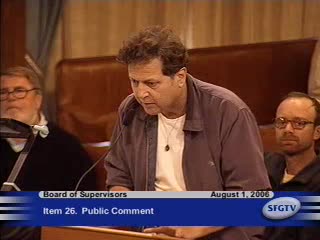
The Board of Supervisors on Aug. 1 heard more than two hours of testimony and technical argument over the Final Environmental Impact Report for demolition and improvements at Wharf J‑10 in the Fisherman’s Wharf/Northeast Waterfront area. Appellants sought more testing and expanded mitigation measures for soil and groundwater contamination and a more complete analysis of preservation alternatives before the city certified the EIR.
David Sincotta, counsel for the appellant and a representative of the F. Alioto Fish Company, said the group did not oppose demolition but urged additional pre-demolition testing beneath the wharf. “I wanna make it clear from the very beginning that we do not oppose the demolition of this pier. We’re not here to oppose this project moving forward,” Sincotta said, adding that the concern was the site’s contamination history and the need to tailor a health-and-safety plan to the specific soils that will be disturbed.
Planning Department staff — represented in the hearing by planner Nani Turrell — told the board the draft EIR already identifies potential contaminants and requires a health-and-safety plan (mitigation measure IS-17) that must address hazardous materials encountered during demolition. The staff memo in the appeal packet notes that the San Francisco Bay Regional Water Quality Control Board (RWQCB) has adopted enforceable site cleanup requirements obligating ExxonMobil to complete a risk-management plan prior to redevelopment in the area.
Port officials said they have worked with regulators and the community and urged the board to uphold certification. Port Director Monique Moyer told supervisors the site is structurally unsafe and “J 10 is not safe and possesses significant risks and hazards,” and said the port has been working with the RWQCB and other agencies on remediation and demolition planning. Port engineer Carol Bach explained that petroleum contamination in the area migrated on the groundwater and that the volume of soil likely to be disturbed by demolition was small (the port described it as “less than 40 cubic yards”).
Community groups, merchants and preservation advocates pressed a different point: that the EIR’s alternatives analysis did not present a preservation approach evaluated to the “best practices” level the appellants wanted. Lucian Tireso, who said his family’s business operates near the wharf, asked the board to order soil testing “before the middle generation before any more children are hurt like me.” Telegraph Hill Dwellers and other neighborhood groups cited case law in which courts found certain documentary or salvage mitigations to be inadequate where demolition would destroy a significant historic resource.
Planning staff and the port described preservation variants that were added to the document after consultation with the Landmarks Preservation Advisory Board and outside consultants, including an approach involving dismantling and reconstructing the building and a variant that would construct temporary structural supports. The port also said it had engaged Moffatt & Nichol and other engineers for peer review of preservation alternatives.
After hearing testimony from appellant counsel, port staff, preservation advocates, merchants and residents — including an 11‑year‑old witness who asked for soil tests near his workplace — the board voted to continue the specific certification items one week so the board could receive additional follow-up information, including clarification on whether private contractors could perform the requested subsurface testing and additional details from the port and the RWQCB. Supervisor Dufty moved to continue the items; Supervisor Ammiano seconded the motion, and the board approved the continuance without objection.
The continued items (the planning‑commission certification and associated findings and directing motions) were scheduled to return at 4:30 p.m. one week later so supervisors could review further materials and answers to contractor-capability questions and other outstanding technical issues.
—Key points from the hearing: The appeal does not argue against demolition per se but seeks more pre-demolition site characterization in specific areas and a more robust consideration of preservation alternatives. Port staff and planning staff say regulatory cleanup orders and the EIR’s mitigation measures provide an adequate framework; appellants and neighborhood advocates want additional, site‑specific testing and preservation planning prior to final certification.