Get Full Government Meeting Transcripts, Videos, & Alerts Forever!
Get email alerts on the Early Childhood Education topic
No spam. Unsubscribe anytime.
Shelby County approves ordinance to expand universal pre-K, adds 100% readiness goal
Summary
The Shelby County Board of Commissioners approved a joint ordinance with the City of Memphis to expand pre-K to all 3- and 4-year-olds regardless of income, set the program's effective date and amend the readiness goal from 90% to 100%.
The Shelby County Board of Commissioners voted to approve a joint ordinance with the City of Memphis to expand access to high-quality prekindergarten to all 3- and 4-year-old children in Shelby County regardless of family income.
The ordinance, which the commission amended and approved on final reading, directs the county and city mayors to jointly select and authorize a fiscal agent to manage strategy and distribution of funds. The commission filled a previously blank effective-date field to read April 29, and it adopted a substantive amendment changing a stated county goal from 90% kindergarten readiness to 100% kindergarten readiness.
Candace Thomas, representing First 8 Memphis (the program designated in discussion as the fiscal agent), told commissioners that expanding access to pre-K "is a very, very, very big deal for a community to have access to pre k at 3 and 4 years old and regardless of income." Thomas outlined existing First 8 classroom placements in Oak Haven and noted ongoing work to expand in targeted neighborhoods.
Dozens of parents, educators and school-system representatives urged passage during public comment. Notoria Carpenter, a parent, said her son's early learning experience made a measurable difference: "I have a senior in high school that graduates actually in a month, and he got his start through pre k." Laura Garza, a bilingual parent and former teacher, described how early learning "fosters language acquisition skills" and allows parents to maintain employment and educational pursuits. Divalon (Veil) Gordon, speaking for Memphis-Shelby County Schools leadership, called universal pre-K a "moral imperative" and cited readiness benchmarks showing only about 40% of incoming kindergarteners meeting readiness standards.
Commissioners debated implementation details and funding but did not set a specific county dollar amount in the ordinance. Thomas told the commission the ordinance establishes policy and that dollar amounts and contract terms will be addressed during budget and contract negotiations. She said First 8 is the current fiscal agent through June 30 and that the county currently invests about $9.5 million in pre-K; the fiscal agent will seek increased funding and the county will negotiate contract terms going forward. In committee and on the floor, staff estimated an initial expansion cost projection in the tens of millions (Thomas said an estimate "upwards of $30,000,000" when asked about the overall cost to fully implement universal pre-K countywide), and Thomas described a multi-year implementation timeline (roughly three years to cover 4-year-olds and five years to include 3-year-olds) that depends on securing sufficient funding and recruiting/train ing teachers.
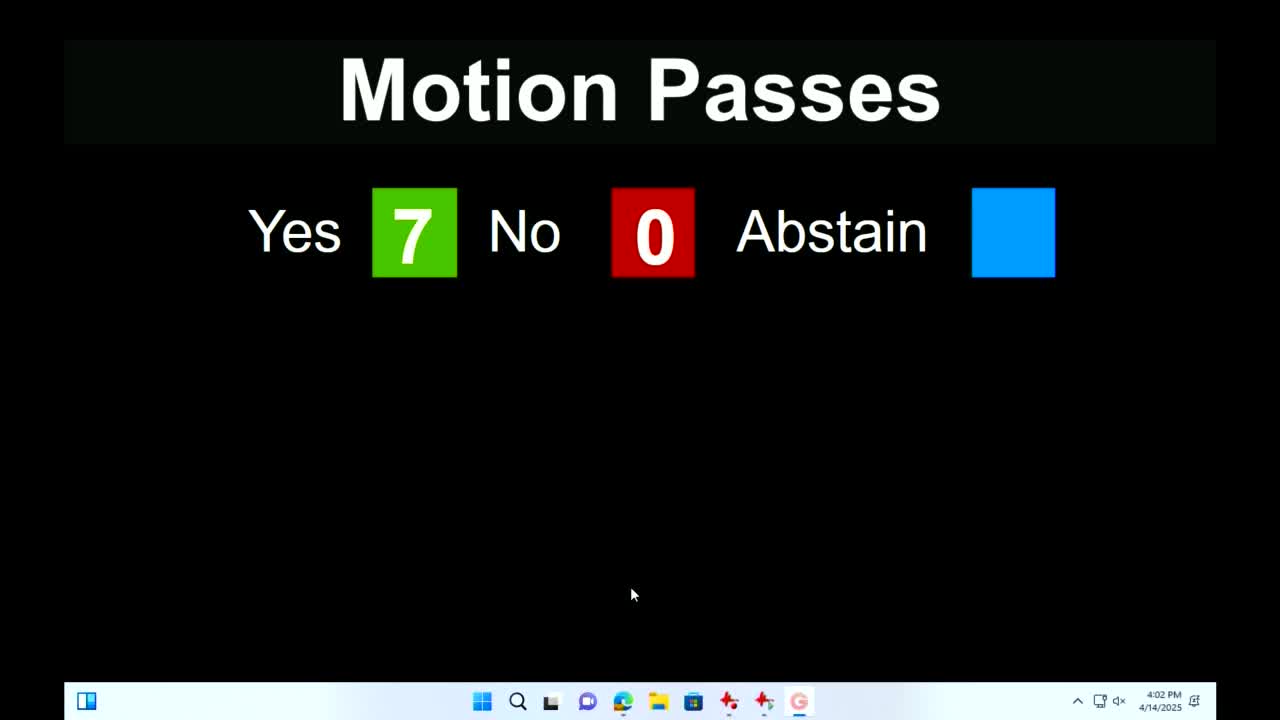
Commissioners also suspended the usual fourth-reading requirement so the ordinance could be considered on its final reading. Commissioner Brittany Thornton moved the amendment to change the readiness goal to 100%; that amendment passed 7-1. The ordinance, as amended, passed on final reading by a recorded 9-0 vote.
Supporters said the change would allow the county to pursue a universal standard and emphasize teacher training and provider capacity as part of a multi-year rollout; opponents cautioned that a 100% numeric aspirational goal may be difficult to measure in the near term given other non-school factors that affect readiness. The ordinance does not allocate a specific county appropriation; any funding changes will require separate budget or contract action.
The ordinance references state and federal programs that previously set income-based eligibility criteria: the state's voluntary pre-K statute and the federal Head Start Act, both noted in the committee record, but replaces income as the sole criterion with age and residency for the new countywide program.
The commission approved the ordinance after extended public comment and floor debate; the county and city must now complete joint selection of a fiscal agent and negotiate contracts and funding levels for implementation.