Get Full Government Meeting Transcripts, Videos, & Alerts Forever!
Get email alerts on the Economic Development topic
No spam. Unsubscribe anytime.
Grimes County court discusses tighter coordination with Navasota chamber, Greater Brazos Partnership on economic development
Summary
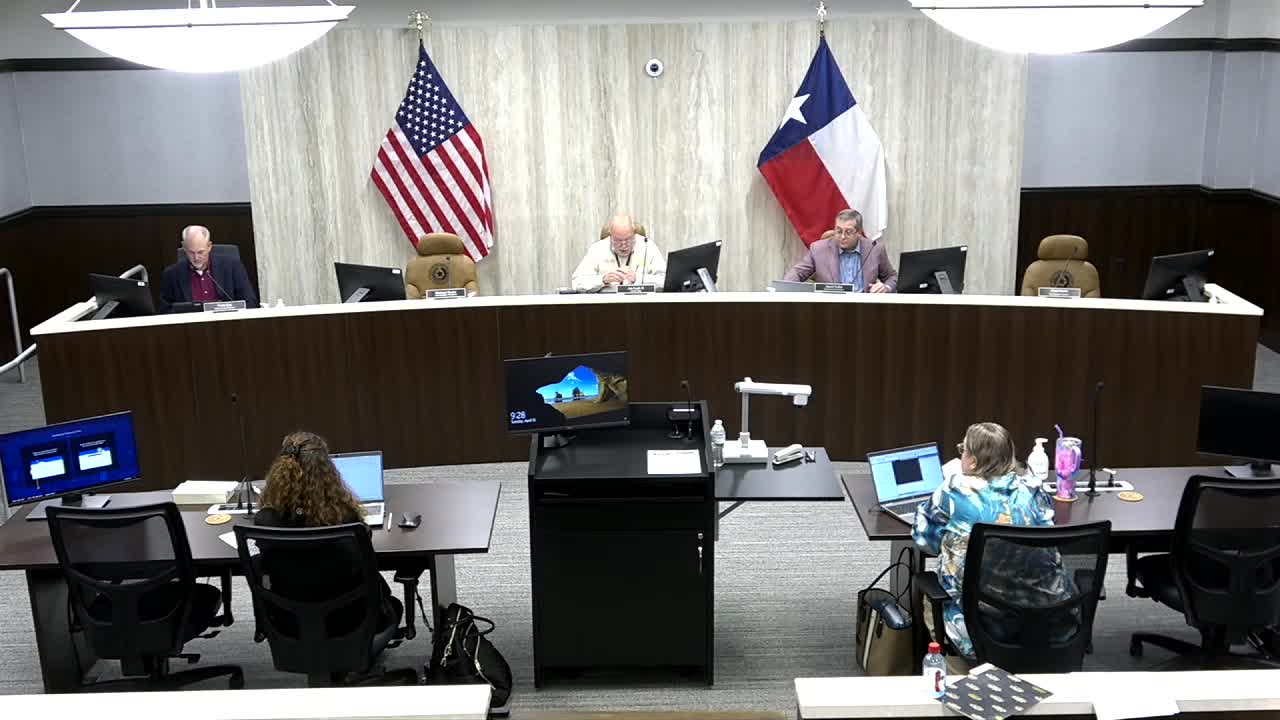
Grimes County Commissioners Court met May 20 to review coordination with the Navasota Grimes County Chamber of Commerce and the Greater Brazos Partnership on county economic development priorities for fiscal 2024–25.
Grimes County Commissioners Court met May 20 to review coordination with the Navasota Grimes County Chamber of Commerce and the Greater Brazos Partnership on county economic development priorities for fiscal 2024–25, discussing steps to inventory county properties, improve the county economic development web presence, and advance infrastructure and workforce preparations needed to attract investment.
The discussion, led by Commissioner David Tullis, focused on what the court and chamber must do to meet obligations in the county’s economic development contract and which items on a previously produced 17-point list are achievable immediately, which require planning, and which are longer-term or “wish list” items. “It is my personal conviction that it’s in the long term best interest of the county to look at creating an in house economic development department coordinator,” Commissioner David Tullis said, urging the court to begin budget conversations on a dedicated county role.
Why it matters: Court members said a clearer county role, a public inventory of developable sites, and closer coordination with regional partners and utilities are necessary for Grimes County to compete for projects that require significant infrastructure, such as large manufacturing or high‑tech facilities. Several presenters tied those capacity gaps to specific near-term work: a property survey and listings, improved permitting information for prospective developers, and targeted outreach to TxDOT and utilities.
Top actions and next steps
- Property inventory and web presence: Commissioners directed steps to catalog county-owned and developable properties and make the inventory accessible through the county’s economic development page and linked Chamber/Greater Brazos Partnership pages. The chamber said it is updating its website and an economic development/business guide will be integrated and hyperlinked.
- Broker access and site listings: Court members discussed authorizing up to three county designees to have direct access to the county economic-development page to add or edit site listings; the court also signaled it may engage a broker to represent county properties and maintain listings.
- TxDOT and road planning: Commissioners asked staff to pursue a meeting with TxDOT District Engineer Chad Boney to discuss accelerating Grimes County projects, including Highway 105 and the 249 expansion, and to request updated traffic counts that could change project timelines.
- Infrastructure and utilities engagement: Jennifer Luna, project manager with the Greater Brazos Partnership, said the regional organization is compiling a five‑county site inventory and working with utilities and workforce partners to identify sites that are “site ready.” Luna said developers often disqualify sites lacking utility connections, substations or broadband and that the Partnership is packaging utility and vendor support to “sweeten” submissions from Grimes County.
- County economic development coordinator and internship program: Commissioners discussed creating a county economic development coordinator position (timing contingent on budget decisions) and expanding internship programs with local universities and workforce partners to support economic development tasks such as maintaining site inventories and representing the county at trade events. Meeting presenters described typical internship terms as 6–8 weeks, with a recommendation that 12 weeks produces stronger results; estimated pay ranges discussed were $10–$15 per hour for part-time interns.
- Hotel Occupancy Tax (HOT): The court heard an update that a hotel occupancy tax bill the court helped draft had advanced in committee in Austin; the judge and commissioners said the county would not implement any tax collection until the legislature authorizes it and local stakeholders (lodging owners, event operators) have been consulted on program design. The county’s stated intent is to use HOT revenue for tourism marketing, convention facilities and programs that directly benefit local lodging businesses.
Obstacles and constraints cited
- DPS driver license testing and staffing: Commissioners reported state Department of Public Safety (DPS) personnel to administer license testing are funded by state appropriations and that, if approved, it could be up to two years before a DPS‑funded tester is available locally. County-run license renewal services are possible but would require the county to fund and hire a local staff person to operate renewals.
- Site readiness and utilities: Multiple participants stressed that greenfield sites without preexisting utilities, environmental clearances, geotechnical reports and surveys are unlikely to be competitive. The Greater Brazos Partnership and chamber said they will prioritize “shovel-ready” or close-to-shovel-ready sites in their state submissions.
Programs and partnerships mentioned
- PACE Lone Star: A property energy/rehabilitation financing program (PACE Lone Star) was cited by the chamber and Greater Brazos Partnership as a tool to assist buyers of older buildings downtown or city hubs that need energy upgrades or renovation.
- Workforce and CTE coordination: The Partnership highlighted ongoing ties with local school career and technical education (CTE) programs and with regional workforce partners to build industry certifications and pipelines that would make local labor pools more attractive to employers.
Formal action recorded
At the meeting’s close, Commissioner David Tullis moved to adjourn and Commissioner Philip Cox seconded. The court voted 3–0 to adjourn at 11:01 a.m.
What’s next: Commissioners signaled they want periodic, focused sessions on economic development (quarterly or project‑triggered) rather than only brief quarterly updates. Staff and chamber representatives will return with more detailed property inventories, proposed access lists for maintaining the county site database, and options for budget language to support an in‑house coordinator and internship funding.