Get Full Government Meeting Transcripts, Videos, & Alerts Forever!
Get email alerts on the Budget Housing Education topic
No spam. Unsubscribe anytime.
Richmond residents press council to fund mobile-home repairs, affordable-housing trust and school contracts during budget hearing
Summary
Hundreds of residents urged Richmond City Council during a public hearing to restore or add funding for mobile-home repairs, dedicate $8.2 million from expiring tax abatements to the Affordable Housing Trust Fund, expand the Family Crisis Fund and fully fund Richmond Public Schools collective bargaining agreements.
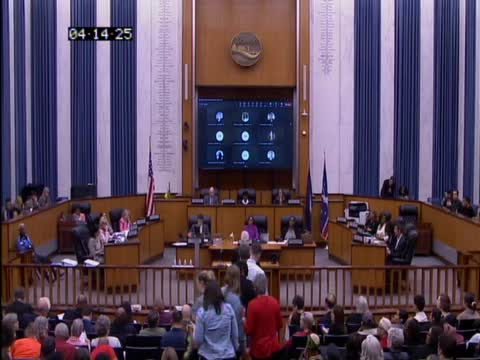
Hundreds of Richmond residents urged the Richmond City Council on April 14 to add or restore funding for mobile-home repairs, make the legally required $8.2 million transfer from expiring property-tax abatements to the Affordable Housing Trust Fund and fully fund school staff collective bargaining agreements as the council continues its 2026 budget review.
Speakers at a lengthy public hearing asked council to support a proposed $1,000,000 allocation for mobile-home repairs and to ensure a dedicated revenue stream to the Affordable Housing Trust Fund that residents and advocacy groups said the city has not followed in recent years. Many speakers also urged the council to increase the Family Crisis Fund and to guarantee funding for negotiated raises and supplements for Richmond Public Schools (RPS) staff.
Advocates and residents framed the requests as urgent. Martin Wegbrite of Richmonders Involved to Strengthen our Communities (RISC) said the draft budget cuts $200,000 from the eviction-diversion program and removes $800,000 from a proposed mobile-home repairs allocation. "A cut of 20% would deny help to 67 families facing eviction," Wegbrite said. He and others said the mayor’s proposed budget did not follow a 2021 city ordinance that, they said, requires revenue from expiring tax abatements be directed to the Affordable Housing Trust Fund.
Multiple speakers cited specific dollar figures. Several community leaders and residents asked that the council put $8,200,000 into the trust fund from expiring abatements, an amount repeatedly referenced during public comments and described in a Davenport Public Finance analysis cited by speakers. Pastor Derek Redwine and other RISC members told council that the mayor had previously committed funds that do not appear in the current proposal.
On mobile homes, speakers described mold, leaks, pest infestations and extreme temperatures in residences where children and older adults live. Pastor Marvin Gilliam and others said the administration had promised mobile-home repair funding that was not reflected in the budget document; Gilliam said the administration directed some funds to an unhoused-services project called Eden’s Village without consulting mobile-home residents. Several residents and advocates said mobile-home repairs are a short-term intervention that prevents families from falling into homelessness while longer-term housing strategies proceed.
Education and collective bargaining were another major thread. Members of the Richmond Education Association and RPS staff said the proposed city budget does not fully fund negotiated contracts, risking morale and staff retention. RPS teacher speakers and union leaders asked council to ensure the city provides the funds required to honor the agreements the unions won.
Other funding priorities raised at the hearing included: continuing funding for the Early Childhood Care and Education Trust Fund (several providers asked council to restore it to $1,000,000, though the mayor’s proposal included $500,000), preserving the Office of Community Wealth Building, and sustaining the Trauma Healing Response Network’s violence-prevention work. Friends of the James River Park urged the council to keep $16,000,000 in the capital budget for Mayo Island park work; they said the city risks returning earlier grant money if the project is not substantially underway by an October 2026 deadline.
Council members acknowledged the volume of testimony and said they would review amendments. Council member Kenya Gibson, who led a group of council amendments, said her team identified about $8,000,000 in operating funds to support the Family Crisis Fund, eviction-diversion programs, RPS needs and rental inspection; her group also located roughly $3,000,000 in capital items tied to the “people's budget.” Several council members said public input would shape the next rounds of amendments.
The council recessed action on budget-related ordinances and moved the pending budget papers to a later meeting to allow further review and public engagement. The city clerk also confirmed that the council will hold another public hearing on proposed amendments.
The public hearing on the budget lasted more than three hours and included dozens of speakers representing neighborhood groups, faith organizations, labor unions, early-childhood providers and nonprofit service agencies. Advocates repeatedly urged the council to treat the budget as a statement of priorities and to prioritize deeply affordable housing, direct assistance to residents at imminent risk of displacement, and full funding for negotiated school staff raises.