Get Full Government Meeting Transcripts, Videos, & Alerts Forever!
Get email alerts on the Climate Action topic
No spam. Unsubscribe anytime.
Milwaukee County committee recommends Climate Action 2050 plan, cites $441 million cost estimate and multi-decade implementation
Summary
The County committee recommended adoption of the Climate Action 2050 plan after a presentation from the Office of Sustainability and consultants. The plan targets county operational carbon neutrality by 2050, lists an estimated $441 million cost premium spread across decades, and emphasizes annual reporting and departmental standards.
Milwaukee County Committee on Community, Environment and Economic Development recommended adoption of the Climate Action 2050 plan after a presentation by the county Office of Sustainability and its consultants, and after public comment for and against the proposal.
The proposed plan lays out a path to carbon neutrality for county operations by 2050, focusing on avoiding new emissions, reducing existing emissions through efficiency, substituting lower‑carbon fuels and technologies, and using offsets only for hard‑to‑abate sources. Grant Helley, director of the Office of Sustainability, told the committee Milwaukee County had “cut its operational emissions by 46% from over 207,000 metric tons down to about 114,000.” The plan covers scope 1 and 2 emissions — energy used in county buildings, street lights and county vehicle fleets — and excludes ancillary sources such as solid waste and employee commuting.
The plan includes an illustrative, high‑level cost estimate described in the report as a $441,000,000 cost premium. Consultants and staff repeatedly said that figure is a present‑day rough order‑of‑magnitude estimate spread over the next 25 years, and that many measures would be timed to coincide with ordinary capital replacements. “That first column lists the specific strategy,” consultant Tyler Zastrow said while reviewing the project table, adding that some projects are cash‑positive with short paybacks and will be prioritized in the near term.
Why it matters
Supporters said the plan advances public health, equity and long‑term operational savings while creating local green jobs. Chairwoman Marcilia Nicholson, who authored the county board resolution in 2021 calling for a carbon neutrality goal, said climate action is “not optional. It's a moral, economic, and public health imperative.” Several community organizations and advocates said the plan should be adopted so the county can better access grant funds and coordinate investments.
What was presented and how it would work
Consultants from McKinstry and county sustainability staff said the plan rests on four strategic pillars and department‑level implementation. Tom Chansick of McKinstry highlighted the fleet recommendations and told the committee: “So maybe the most important recommendation we have here is to develop that multiyear plan, to incorporate electric vehicles into that light duty fleet…,” emphasizing that vehicle purchases must be coordinated with charging infrastructure planning. On buildings, presenters recommended continued lighting and HVAC retrofits, use of sustainable design standards for new construction and timing fuel‑switching investments with equipment replacement cycles.
Committee discussion and public comment
Supervisors pressed staff on two recurring concerns: the source of funding and the practical timeline for technology adoption. Supervisor Logsdon asked, “When you talk about substitute fuel sources, other than solar, what is the substitute fuel?” Consultants answered that substitution often depends on a cleaner grid (they cited We Energies’ 2050 goals), and on switching end uses from onsite natural gas to electricity as the grid decarbonizes.
Supervisor Logsdon and others pressed on the $441 million figure and the risk of raising taxes. Helley and McKinstry staff said the plan is intentionally high‑level, that some measures are tax‑positive in the near term, and that the Office of Sustainability will actively pursue federal, state and philanthropic grants and align projects with capital budgeting to limit direct taxpayer impact.
Public commenters included residents and advocates who urged quick adoption and emphasized health, equity and job benefits. Linda Frank of Our Future Milwaukee Coalition and Kat Claus of Citizen Action Wisconsin described the plan as a public health and equity measure. Candace Owley of the League of Women Voters said the League will help with community engagement. Joshua Salazar of Citizen Action urged the county to lead on green energy; some speakers urged fiscal caution and noted the federal funding environment can change.
Formal action
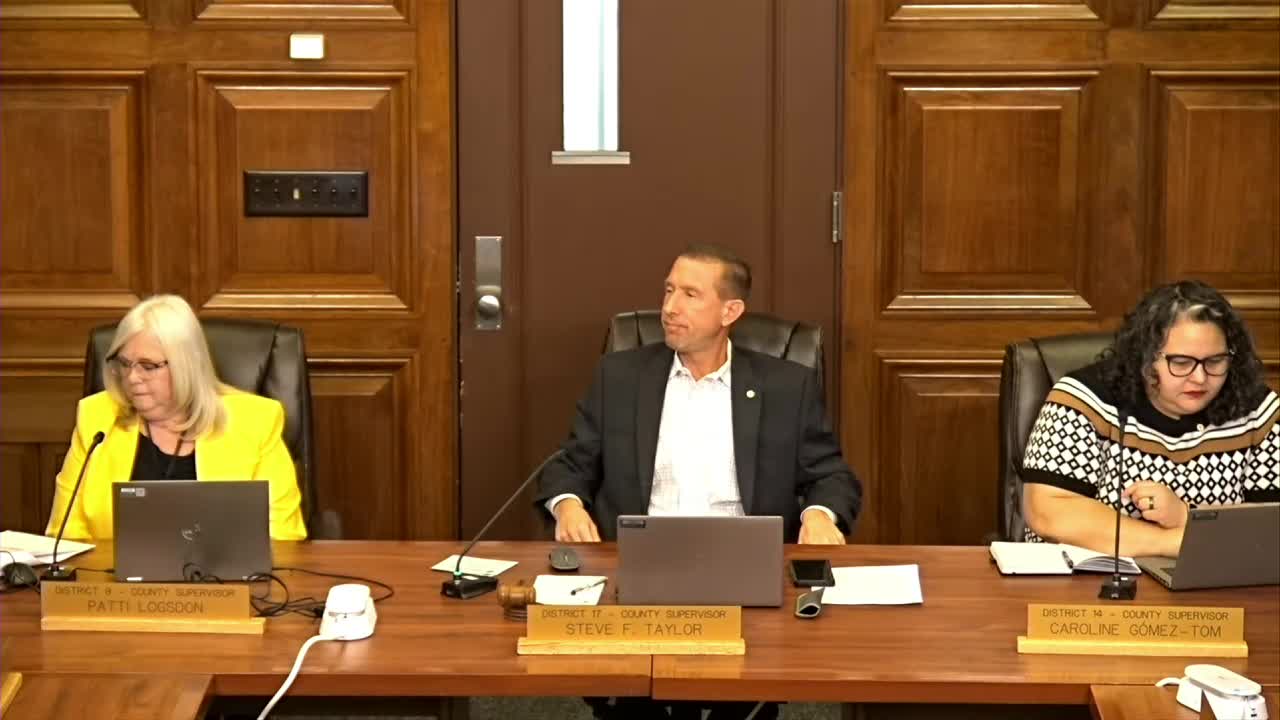
Supervisor Gomez Tom moved that the committee recommend adoption of item number 2, the Climate Action 2050 plan. The roll call vote was recorded as five ayes, zero nos. The motion passed.
What comes next
Presenters said the county will pursue annual reporting, ongoing community engagement and efforts to align capital projects with plan strategies. The Office of Sustainability published sustainable design standards and said staff will incorporate the standards in the 2026 capital planning process. The plan will remain a multi‑year, adaptable roadmap rather than a single binding capital authorization.
Ending
Committee members and staff repeatedly framed the plan as a long‑term framework to be executed project by project; several supervisors said they supported a cautious, phased approach that leverages grants and times higher‑cost measures with replacements of worn equipment.