Get Full Government Meeting Transcripts, Videos, & Alerts Forever!
Get email alerts on the Clean Energy And Transportation Transition topic
No spam. Unsubscribe anytime.
Operations committee recommends DeKalb adopt 100% clean energy and transportation transition plan with administrative review
Summary
Commissioners endorsed a resolution adopting a county clean‑energy and transportation transition plan, asking the CEO to evaluate the best organizational structure to implement the plan; the administration signaled support and noted potential operational savings and staffing considerations for implementation.
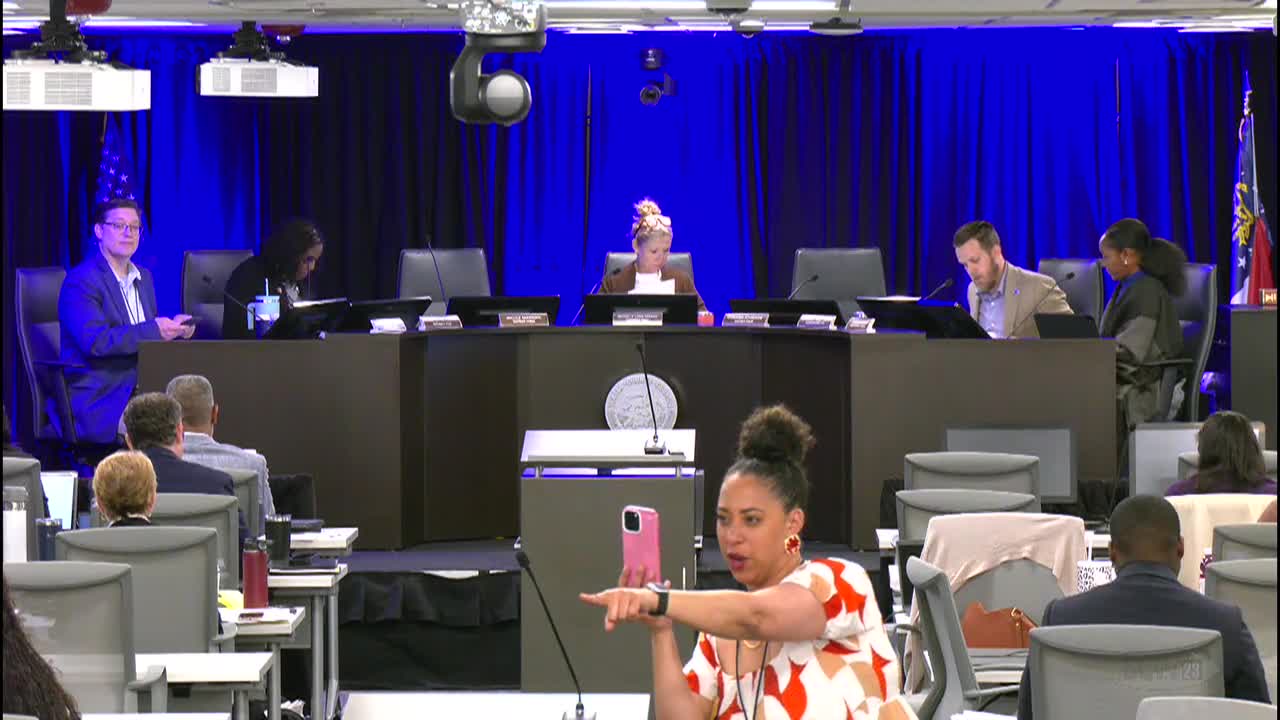
The DeKalb County Operations Committee voted to recommend that the full board adopt a 100 percent clean energy and transportation transition plan and asked the county CEO to evaluate the best organizational structure to execute the plan.
Commissioner Ted Terry, who led the presentation, said the process began four years ago and the plan — prepared with assistance from Southface — focuses first on energy efficiency, rooftop and ground solar for county properties, and electrification of county vehicles. "The exciting part ... is that it really gives the administration and our CEO the full support of the governing authority to move forward with analyzing our buildings for energy efficiency," Terry said.
The resolution notes potential operational savings. Commissioners discussed an estimate in the plan that solar and efficiency measures could yield roughly $1 million a year in operational savings once implemented. The administration and department directors said the near‑term steps focus on cost containment and energy audits for county facilities such as the Malouf and Sand Street buildings.
Director Robert Gordon (Fleet/Facilities) said electrifying light‑duty vehicles shows clear short‑term maintenance savings and lower energy cost per mile, but cautioned that heavy‑duty electric vehicles remain significantly more expensive now — in the range of several hundred thousand dollars to about $1 million for certain models — and battery life remains a practical unknown beyond manufacturer warranties (presentations noted typical warranties of about eight to ten years or 100,000 miles). Gordon said light‑duty electric vehicle prices have fallen in recent procurement rounds (he cited recent Ford Lightning purchases around $48,000 each) and maintenance needs are low.
The county administration said it supports the plan in concept and emphasized that staffing and implementation details (for example whether to hire an energy manager or distribute sustainability responsibilities across departments) should be further evaluated by the CEO. Commissioners added a friendly amendment asking the CEO to evaluate and recommend the organizational structure best suited to implement the transition plan. The committee approved the resolution with that amendment by voice vote.
Next steps: the committee recommended the plan for board adoption and directed the CEO to propose an organizational approach for implementation; staff will continue facility audits, pursue cost‑containment opportunities and coordinate community engagement components of the plan.