Get Full Government Meeting Transcripts, Videos, & Alerts Forever!
Get email alerts on the Animal Welfare Companion Animal Litter Registry topic
No spam. Unsubscribe anytime.
DeKalb committee advances plan for a companion-animal litter registry, defers final vote
Summary
The DeKalb County Operations Committee heard expert testimony on a proposed litter registry intended to make lawful and unlawful breeding visible, voted to defer formal action to the next operations meeting and asked staff and county attorneys to circulate an updated ordinance draft.
The DeKalb County Operations Committee on Wednesday heard a detailed presentation on a proposed ordinance that would require people who deliver a litter of puppies, kittens or domestic kits to notify the county, and the committee voted to defer final action to the next operations meeting to allow staff and the county attorney to finalize draft language.
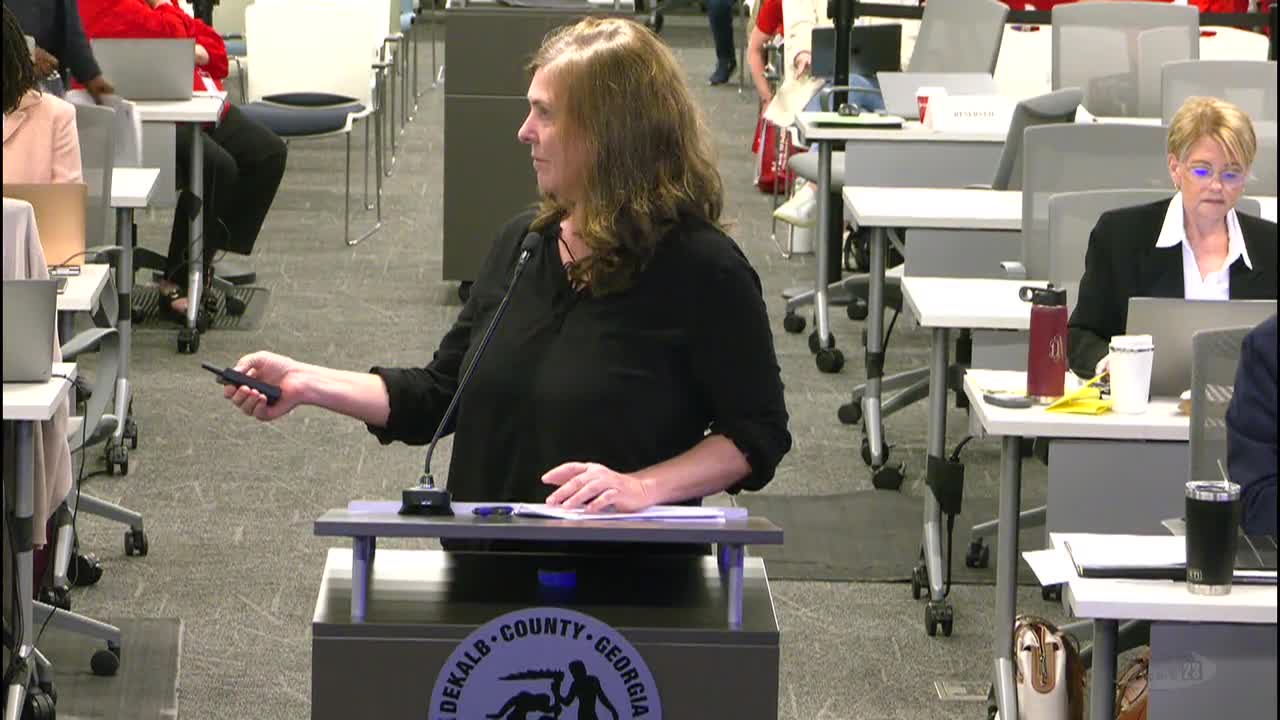
Professor Lisa Mylett, a University of Georgia law professor who directs a practicum in animal welfare skills, told the committee the proposal is intended to “patch the hole” in Georgia’s pet‑dealer licensing law that allows low‑volume breeders to remain invisible to regulators. Mylett said state law exempts anyone who produces only one litter in a 12‑month period from pet‑dealer licensing, and that exemption lacks a reporting mechanism to show whether a litter is truly a breeder’s first of the year.
“The problem is in the aggregate number of people engaging in the activity and the total amount of societal harm that can result,” Mylett said, arguing a simple, free registration would make lawful litters visible and reveal illegal breeders.
The draft ordinance discussed by the committee would require owners to report births within 21 days, at no cost. The proposal emphasizes voluntary compliance and incentives — for example, offering first vaccines, basic deworming and microchips at low or no cost for animals whose litters are entered in the registry, and prioritizing registered litters for county spay/neuter events. Mylett estimated basic initial vaccinations could cost the county roughly $3–$4 per animal while saving substantially on shelter care costs.
County attorneys and several commissioners discussed preemption concerns. Mylett said the state’s Animal Protection Act permits local ordinances that do not conflict with state law, and the county attorney told the committee staff would review the final draft to ensure it does not conflict with state statute. Commissioners asked for written materials and a fact sheet for animal engagement officers, and stressed that initial enforcement should emphasize education and offers of free or low‑cost veterinary services rather than immediate fines or seizures.
Commissioner Michelle Long Spears thanked Mylett and animal advocates for their work and said staff and the presenter would prepare another draft. The committee voted to defer action so the revised ordinance could be circulated to members in advance of the next operations meeting (the first Tuesday in May, as noted in committee remarks).
The committee discussion included practical details on how the registry would be used by animal control officers during field visits and calls from neighbors, and several commissioners voiced support for the registry and the “carrot over stick” approach that pairs registration with free services and education.
Next steps: staff will incorporate ideas from the presentation and legal review into a revised ordinance, circulate the draft to commissioners, and return the item to the operations committee at the next meeting for further consideration.