Get Full Government Meeting Transcripts, Videos, & Alerts Forever!
Get email alerts on the Food Trucks topic
No spam. Unsubscribe anytime.
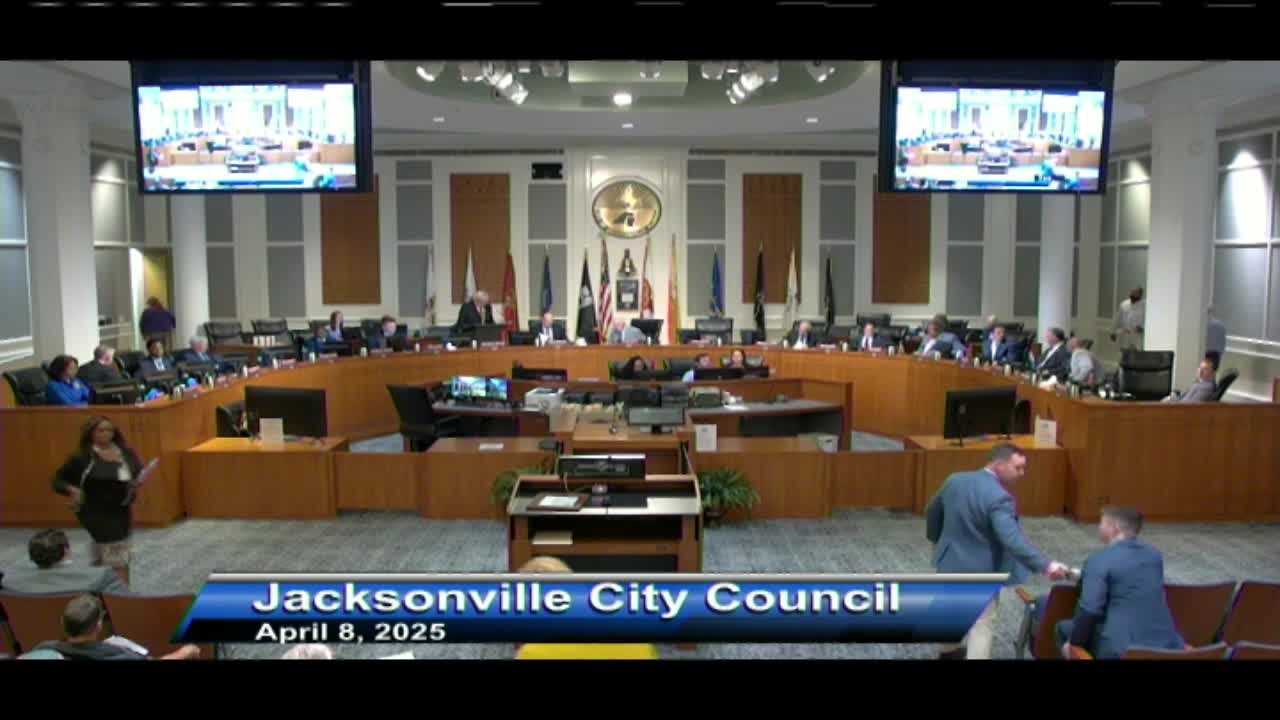
Council approves restriction on open‑flame food trucks near fuel pumps after hours of debate
Summary
The Jacksonville City Council voted to ban open‑flame food‑truck cooking within 300 feet of fuel pumps and set a $250‑per‑day penalty after public comment and a two‑hour floor debate about safety and small‑business impacts.
Jacksonville City Council on the meeting day approved ordinance 20‑25‑159, which prohibits the use of open‑flame cooking equipment by mobile food vendors within 300 feet of fuel dispensers and sets a $250‑per‑day civil penalty for violations.
Council members debated the measure for more than an hour, weighing a fire‑safety recommendation from the fire chief against appeals from food‑truck operators and small‑business advocates. Supporters said the rule is a preventive safety measure; opponents said it would harm entrepreneurship and local vendors who use gas‑station locations as regular points of business.
The ordinance passed after debate by recorded vote, 12‑7. A motion to postpone the measure failed earlier, 7‑12. Council members also adopted related amendments that defined the prohibited activity as "open‑flame" cooking and tied the safety distance to guidance cited by fire officials.
Chief Keith Powers of Jacksonville Fire Rescue told the council the restriction followed national emergency guidance. "This is a low‑frequency, high‑risk type of event," Powers said, adding the department relied on the Emergency Response Guide and NFPA guidance in recommending an isolation distance. He told members the 300‑foot figure was drawn from the emergency response guide for liquefied petroleum gas incidents and related safety planning.
Councilmembers were split on whether the available incident data justified the rule. "The problem does not exist," said Dr. Reggie Johnson, a council member who opposed the ordinance, arguing the city lacks robust local data showing recurring catastrophic incidents tied to food trucks. Other members urged a precautionary approach. "Food trucks are welcome to gas stations, just not open‑flame food trucks," said Councilmember Arias, who supported the restriction.
During public comment, several food‑truck operators and small‑business advocates urged changes. Kathleen Pereira told the council, "Show your support for small businesses and the free market by voting this bill down," while James Matchett, a local vendor and former fuel‑industry worker, cited NFPA and OSHA guidance that he said supported a shorter safety buffer than the 300‑foot figure but warned against eliminating food‑truck opportunities entirely.
The ordinance allows non‑open‑flame operations to remain at fuel‑station locations, and councilmembers discussed options such as increased inspections and additional resources for the fire marshal and consumer‑affairs staff to support safe operation of mobile vendors.
Votes at a glance (selected final actions recorded during the meeting): - Ordinance 20‑25‑159 (food‑truck open‑flame buffer): approved (vote 12‑7). Key provisions: 300‑foot buffer from fuel pumps for open‑flame cooking; $250 daily civil penalty; exemptions for non‑open‑flame vendors in the ordinance text. - Ordinance 20‑25‑102 (LUZ substitute): approved (19‑0). - Ordinance 20‑25‑182 (community grants listed in agenda): approved (15‑0 with abstentions recorded for conflict of interest as noted on record). - Multiple consent agenda bills and appointments were approved as recorded on the meeting docket.
What the ordinance does and what it does not do: the measure targets only mobile vendors that prepare food using open flames or certain pressurized combustion equipment at or within 300 feet of fuel dispensers; it does not ban food‑service trucks citywide, nor does it prohibit vendors from serving at other locations or using electric/induction or enclosed‑cooking methods. Enforcement will be civil; the adopted amendment sets the penalty at $250 per day while the violation continues.
Councilmembers and staff who supported more time to refine the policy said they will seek additional interdepartmental work to tighten inspection and enforcement capacity. Chief Powers and staff said implementing the rule would also require additional inspection and code‑enforcement resources to be effective. Opponents said the council should revisit the distance figure and consider targeted district‑level solutions so regular vendors are not driven out of longstanding parking points.
The ordinance text, emergency‑response references (Emergency Response Guidebook, NFPA), and recorded votes are part of the public record for this meeting.
Ending: Council members who voted for the measure said it was a narrow, safety‑focused change meant to avoid a rare but severe hazard; members who voted no said the city should instead invest in inspections and targeted education for vendors and rescue personnel before imposing a citywide buffer. The council closed the item and moved on to other business on the agenda.