Lakeville IT director outlines leveled FY26 budget, temporary Windows 10 support and disaster‑recovery upgrades
Loading...
Summary
Information Technology director told the Select Board the FY26 IT budget is essentially level and described near‑term steps: one‑year extended Windows 10 support for older machines, contract inflation for vendor services, a new server room at the new administrative building and plans for redundant internet and disaster‑recovery sites.
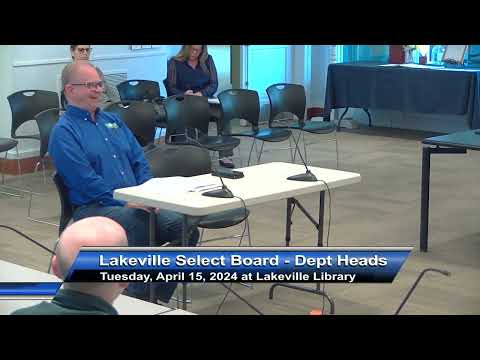
Bob McNally, Lakeville’s information technology director, told the Select Board on April 15 that his proposed FY26 budget is essentially level and that he expects to absorb some contract and licensing increases without a significant capital request.
McNally said an error on the printed budget first page overstated an increase; the corrected figure shows a 1.13% reduction from the prior year. “It actually shows an increase of 22. That is actually a typing mistake. It's actually causing a decrease of 1.13%,” McNally said.
McNally described several programmatic and infrastructure items that the board should expect in the coming year. He said the town negotiated an interim approach to endpoints that cannot upgrade to Windows 11: Microsoft is offering extended support for Windows 10 for one year, and the town will buy that option for machines that otherwise would require replacement. “Microsoft is offering a, relatively inexpensive solution where you can buy extended maintenance, for 1 year on, Windows, 10,” McNally said. He added the extended support will include security patches beginning November 2025 but warned it is not a long‑term solution: “There are some risks though staying, obviously, with Windows 10.”
McNally also reviewed recent and planned projects. The town has established a small server room at the new TBW Administrative Building and moved some systems there; the plan is to build out that location as a disaster‑recovery site that will work in concert with mirrors at the police station and a future site at the highway department. He said the town is arranging redundant internet connections — primary TMLP with Fios as backup — and will relocate the town’s primary internet termination to the police station for improved infrastructure.
On operational systems, McNally reported the police department’s upgraded CAD/RMS dispatch and records system went live last month. He said legacy servers needed only occasionally for older applications are being powered down and will be kept offline except when required.
Board members asked about security and continuity. McNally said extended Windows 10 support will provide patches for the coming year and that the town layers endpoint protection (Cylance, Huntress) on top of operating‑system updates. On redundancy he warned that, until the highway department site is fully equipped, a severed cable at a single center could render town systems unavailable: “If somebody cuts a cable on something, a TMLP and town loses the Internet, you you're basically — we're dead in the water,” he said.
The Select Board and finance committee also noted available capital balances that could be tapped for future IT replacements; McNally said about $9,000 in old capital account funds for IT could be reallocated if the board chose to do so.
Why this matters: the town is prioritizing continuity and cyber visibility while delaying expensive hardware replacements by a year where possible and absorbing modest contract inflation. The board did not take a formal vote on IT funding during the meeting and directed staff to continue refining the FY26 requests ahead of town meeting.