Get Full Government Meeting Transcripts, Videos, & Alerts Forever!
Get email alerts on the Zoning Multifamily topic
No spam. Unsubscribe anytime.
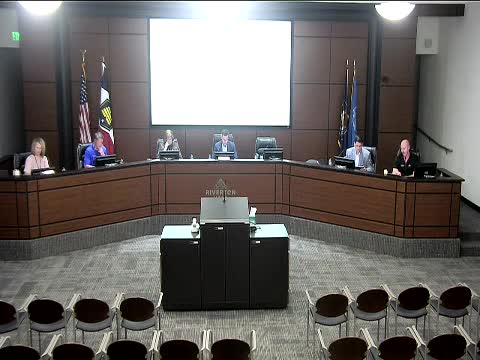
Riverton Council lowers minimum parcel sizes for some multifamily zones, adopts ordinance
Summary
The Riverton City Council approved Ordinance 25‑13, reducing minimum parcel sizes for selected multifamily zoning categories and removing a proposed 0.8‑acre allowance on major roads; the vote was unanimous.
Riverton City Council on Thursday approved amendments to the city code that change minimum parcel sizes for several multifamily zoning designations, adopting Ordinance 25‑13 after a roll‑call vote.
The ordinance reduces minimum lot-assembly thresholds for certain multifamily zones to three acres. Council members said the change is intended to give the city and developers more flexibility to consider smaller infill projects while preserving the council’s discretion to approve or deny any rezone application. The council voted unanimously to adopt the measure.
Why it matters: Riverton is increasingly an infill and redevelopment city rather than one with large greenfield sites. Council members said the new thresholds aim to make it easier for properly designed multifamily projects to be proposed on smaller parcels without guaranteeing automatic approval; any rezone still requires the city’s standard review process.
What the ordinance does: The approved motion amended the proposed text so that selected multifamily categories would require a 3‑acre minimum parcel for applications. A proposed 0.8‑acre standard for major roads was removed from the draft that had been before the council. Council members emphasized the change removes a procedural barrier to applications while retaining review steps — a general‑plan and rezone process remains required.
Council discussion and context: Council members debated competing goals: encourage housing production and preserve neighborhood character. Some councilors urged caution about unintended consequences such as fragmented development along major corridors and off‑site parking impacts; others said a lower minimum helps attract appropriate infill projects. Staff told the council there is no currently undeveloped property already zoned multifamily that would automatically be affected; the change affects the size of new applications that can be filed.
Votes at a glance: The ordinance passed by roll call vote. Council members recorded as voting yes during the roll call were: Councilmember Hammond; Councilmember Broker; Councilmember McKay; Councilmember McDougall; and Councilmember Perucci. The motion as adopted included the specific amendments to minimum parcel sizes described above.
What’s next: The adopted language alters application thresholds but does not rezone any property. Property owners still must submit a rezone/general plan application and obtain council approval for a change in zoning.