Get Full Government Meeting Transcripts, Videos, & Alerts Forever!
Get email alerts on the Community Engagement topic
No spam. Unsubscribe anytime.
Council approves neighborhood association charters after discussing membership, virtual access and communications
Summary
Eugene City Council voted 8–0 April 14 to approve updated neighborhood association charters. Councilors discussed variations in membership eligibility, whether virtual attendees count as members for voting, and allowed communications platforms; staff said charters set city minimums while associations may adopt additional rules.
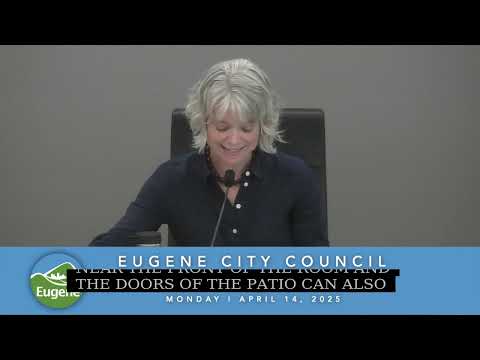
The Eugene City Council approved updated Neighborhood Association Charters (Item C) on April 14 by an 8–0 vote after a brief discussion on membership, virtual participation and communications.
Councilor Jennifer Yeh asked staff about differences across charters in membership eligibility and voting rules, noting some associations set minimum ages at 18 while others included provisions for minors or organizational members. Yeh said she noticed "a lot of similarity, but a little bit of variety, especially around membership issues."
Staff member Cynthia (Neighborhood Services) explained the charters set minimum requirements: neighborhood associations must at minimum include residents and property owners aged 18 or older, but associations may elect to include businesses, nonprofit representatives or employees at their discretion. Cynthia told the council that the city provides equipment, training and support to associations that choose to offer virtual access and that many associations already accept virtual attendees and use sign‑in lists for voting eligibility.
Councilor Keating asked whether neighborhood association electronic communications (email newsletters, Mailchimp, social media) were subject to public‑meeting or public‑records rules. Staff deferred to legal and a subsequent clarification in the meeting noted neighborhood associations are "an integral part of our public engagement process" but are not city arms and therefore are not strictly subject to public‑meetings or public‑records requirements. The council discussed distributing resources equitably to neighborhood associations for outreach, and staff said e‑newsletter costs can be eligible items in neighborhood program funds.
After the vote, councilors indicated staff will post the approved charters and continue to provide training and technical support for virtual and electronic outreach.
The council earlier approved the remainder of the consent calendar (without item C) by an 8–0 vote before pulling item C for discussion.