Get Full Government Meeting Transcripts, Videos, & Alerts Forever!
Get email alerts on the Infrastructure And Planning topic
No spam. Unsubscribe anytime.
Washington County-led study to map costs and options for urban unincorporated areas including Bull Mountain and Metzger
Summary
County and consultant Echo Northwest briefed the Tigard City Council on an 18-month technical study to inventory services, model costs and evaluate policy options for urban unincorporated areas in Washington County; findings will inform future decisions but the project will not itself make policy recommendations.
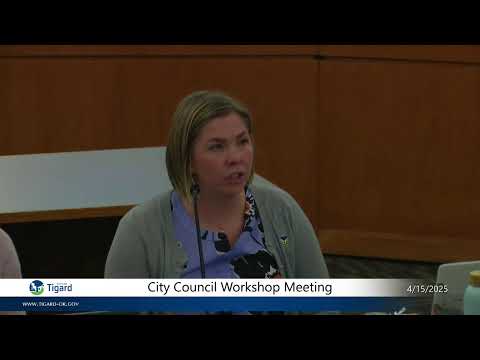
Washington County staff and consultants from Eco Northwest briefed the Tigard City Council on April 22 about an 18-month urban services framework study that will inventory infrastructure and service levels, model costs, and analyze legal and policy options for urban unincorporated areas such as Bull Mountain and Metzger.
“Is there any technical information that you would like to see gathered as a part of this project and do you have any feedback on the project scope?” asked Kimmy Zell, program manager for strategic initiatives, framing the study as a fact-finding effort.
Consultants said the work is explicitly technical and intended to provide an evidence base for future local decisions. The study will document who currently provides services, estimate existing and future costs, and examine policy/legal implications for options such as status quo, boundary changes, shared-service arrangements or incorporation. Eco Northwest will use six case-study areas, including Bull Mountain and Metzger, and will deliver final findings by mid-2026.
The presentation emphasized that the urban unincorporated areas are large—about 215,000 residents countywide—and include parcels that developed before Oregon’s modern land-use system. Consultants said they will quantify infrastructure backlogs and test revenue scenarios, and that staff will bring the technical findings back to elected officials for deliberation.
Councilors asked for interim briefings, greater granularity where useful, and for the study to present practical implementation pathways as well as cost facts. City staff and the consultants said they would plan periodic check-ins with Tigard and other jurisdictions during the project.
Why it matters: Urban unincorporated areas contain significant population and service responsibilities; study findings could affect future decisions on who provides water, sewer, roads, public safety, planning and other urban services and how they are funded.
What’s next: The study will continue data gathering in spring 2025, analyze technical and policy scenarios through fall 2025, and aim to present draft findings to elected officials in 2026 for further action.