Get Full Government Meeting Transcripts, Videos, & Alerts Forever!
Get email alerts on the Health Diabetes topic
No spam. Unsubscribe anytime.
Virgin Islands Diabetes Center asks Legislature for $1.5 million to sustain and expand services
Summary
The Virgin Islands Diabetes Center of Excellence asked the Legislature’s Budget, Appropriations and Finance Committee for $1.5 million to keep clinics open, expand pediatric endocrinology and increase mobile outreach after telling senators it served more than 2,300 patients last year.
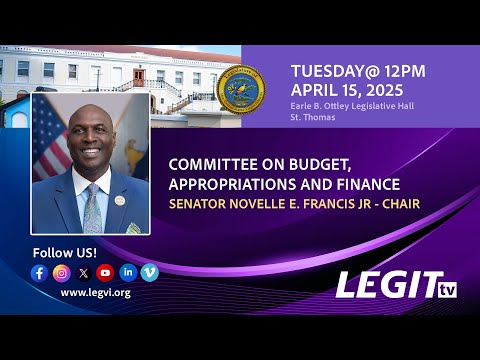
The Virgin Islands Diabetes Center of Excellence (VIDCO) asked the Committee on Budget, Appropriations and Finance on April 15 for $1.5 million to sustain operations and expand clinical and community services across the territory.
VIDCO Executive Director Julia Sheen told senators that the nonprofit provided services to more than 2,301 diabetes patients in the past year through monthly outreach, chronic care management, nutrition and medication-management programs. Sheen said 77% of VIDCO patients have type 2 diabetes, 21% have prediabetes and 2% have type 1 diabetes. She said 63% of VIDCO patients are uninsured, underinsured, on Medicaid or on Medicare and that the center uses grant funding and billing to cover operations.
VIDCO’s request calls for $1,500,000 in local funding to “sustain current operations and expand critical services such as pediatric endocrinology, podiatry and community outreach,” Sheen said. She provided a rough breakdown in testimony: 50% for direct patient care, 43% for preventive programs and 7% for administrative and operational costs.
Why the request matters: Senators and VIDCO staff said stronger outpatient diabetes care and prevention could lower uncompensated hospital care, decrease long‑term costs from complications such as dialysis and amputations, and improve population health. Sheen said remote patient monitoring and a recent rollout of continuous glucose monitors (CGMs) — donated through partnerships — had produced promising improvements among patients with uncontrolled diabetes.
What VIDCO described doing now - Clinical teams on both islands: nurse practitioners and medical assistants on St. Croix and St. Thomas; visiting specialists including an endocrinologist, ophthalmologist and podiatrist; telemedicine support for specialty care. - Mobile health initiative: a newly purchased mobile unit and an ADA‑compliant six‑passenger van to transport patients and run community screenings. - Prevention and education: CDC‑recognized Prevent Type 2 program, school screening planned for May 8 for 4th–5th graders on St. Croix, grocery store “walk‑through” events and monthly virtual nutrition/medication classes. - Partnerships: Howard University (endocrinology), Freestyle Libre (CGMs), University of the Virgin Islands (cooking classes), UnitedHealthcare (wellness initiatives) and territory health agencies.
Outcomes VIDCO cited: Sheen said 80% of patients with uncontrolled diabetes have seen improvements in A1C levels since the remote-monitoring initiative began; examples included individual A1C reductions (e.g., a St. Croix patient from 10.2% to 7.2%, a St. Thomas patient from 12.6% to 6.9%). Sheen said at an August 2024 health fair, 8 of 39 screened patients had referable diabetic retinopathy and 5 had vision‑threatening retinopathy, underscoring the value of screening.
Questions from senators: Committee members pressed for sustainability details, payer mix, current grant funding and staffing costs. VIDCO said Medicaid covers about 18.8% of patients, Medicare 43.5% and 5.9% have no insurance; Sheen said VIDCO currently has roughly $500,000 in federal funds (including ARPA dollars) with about $200,000 of ARPA remaining. Sheen said VIDCO employs six full‑time staff and uses 14 contracted providers; total annual operating expenses were described to senators as about $1.587 million.
On billing and collections: VIDCO said it began billing in the past year and reported approximately $70,000 in receivables and a goal to increase billing revenue to about $350,000. Senators asked about payer mix and outstanding receivables; VIDCO said most reimbursement now comes from Medicare and Medicaid.
Senators also asked about program outreach to SNAP/WIC and the Department of Human Services, engagement with housing communities, and longer‑term sustainability. VIDCO said it is aggressively pursuing grants, billing for services, cultivating donors and planning fundraising.
What the committee did: The presentation drew lengthy questions but no formal committee action specific to VIDCO’s request was recorded in the transcript. Senators asked for more budget breakdown details and a sustainability plan.
Looking ahead: VIDCO said it will move its St. Croix site to the Sign Farm Shopping Center on April 25, plans an open house, will roll out a CGM program funded through partnership grants and seeks legislative support to continue and expand services.
Ending: VIDCO’s testimony closed with a request for continued local support to maintain and expand services that staff and physicians told the committee can reduce hospitalizations and prevent severe diabetes complications.