Get Full Government Meeting Transcripts, Videos, & Alerts Forever!
Get email alerts on the Water Infrastructure topic
No spam. Unsubscribe anytime.
Madison County discusses buying or leasing existing farm wells to bolster water supply
Summary
County water staff outlined options for acquiring or leasing existing poultry-farm wells and discussed technical and regulatory constraints including casing diameter, pump size, treatment needs and cost estimates.
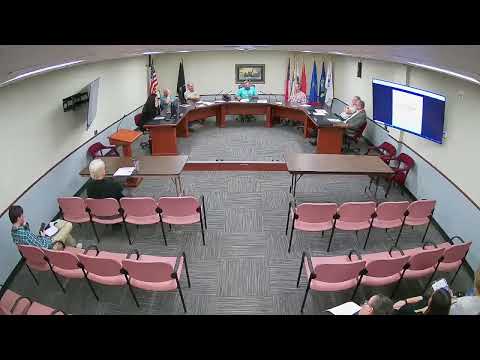
Madison County staff and commissioners discussed Sept. 29 several approaches to expanding the county's potable water supply by acquiring, leasing or otherwise integrating existing private wells into the county system.
Staff said an agreement prototype calls for wells to be bored to 8-inch steel casing to meet treatment and pump-sizing requirements; several speakers said a 6-inch existing well can be tested and, if productive, converted but may require additional investment. County staff gave cost and performance ranges discussed during the meeting: a new drilled well estimated at about $30,000 and conversion or upgrades likely to cost in the tens of thousands of dollars; filtration or treatment systems in some cases could add substantial cost depending on water quality.
Derek (staff member) explained that a 75-gallons-per-minute yield would generally be considered a viable production figure for county needs and that higher yields (above 100 gpm) often require additional pumping equipment or aniline anti-suction systems for pumps. Commissioners and staff noted three acquisition approaches discussed in the meeting: purchase and upgrade by the county; lease arrangements where owners invest and the county pays per gallon; or long-term lease/purchase hybrids.
Staff cautioned that regulatory and operational issues must be resolved before the county can buy or treat raw water from privately-owned wells: the owner or county must meet operator licensing requirements and agree on bulk-water pricing and responsibilities for treatment and wellhead protection. Staff said the county currently buys finished water in some instances but has no untreated raw wells it owns and treats at scale.
No formal action was taken Sept. 29; staff was directed to pursue pricing and continue developing standard agreement templates for potential well acquisitions or leases.