Get Full Government Meeting Transcripts, Videos, & Alerts Forever!
Get email alerts on the Community Services topic
No spam. Unsubscribe anytime.
Public comments press council on homelessness law, religious accommodations and neighborhood enforcement
Summary
Speakers at the Evansville Common Council urged the city to oppose a state bill they say criminalizes homelessness, requested a local ordinance to protect employees’ religious practice for Friday prayers, and asked for local enforcement changes on property maintenance and overnight parking.
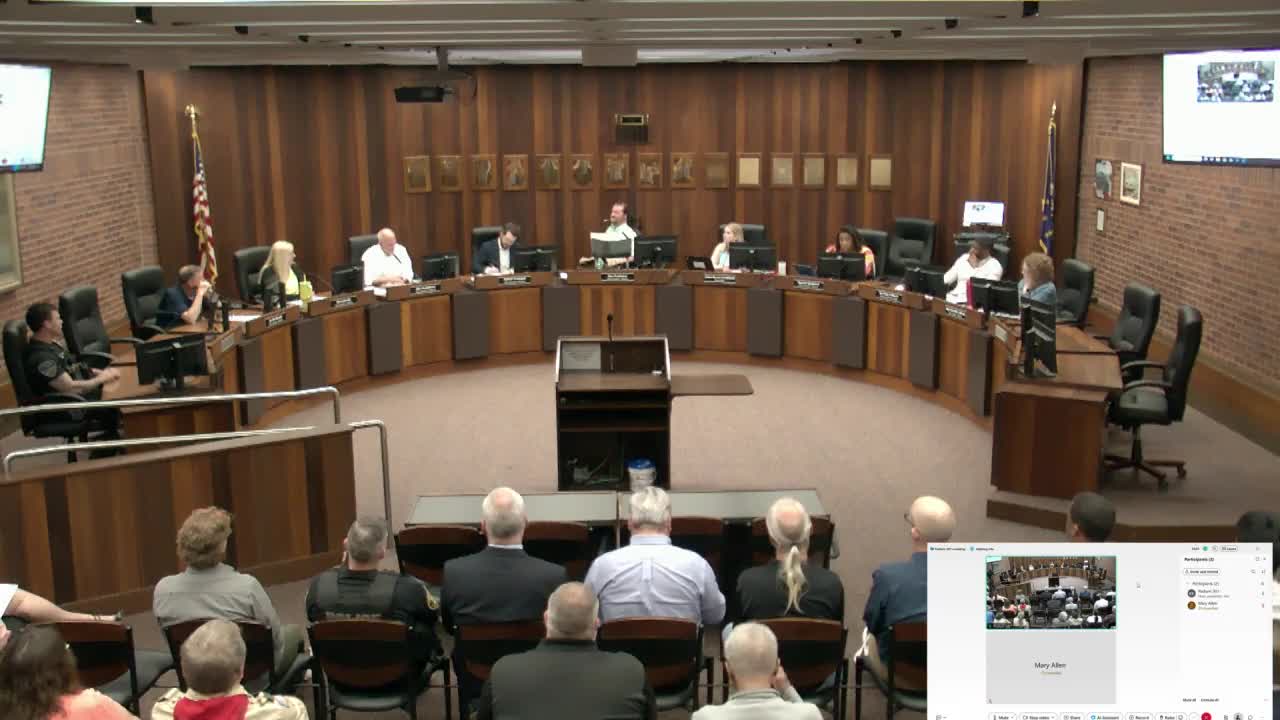
Several members of the public and a councilmember used Monday’s Evansville Common Council meeting to raise different policy concerns: speakers condemned a state bill that criminalizes homelessness, an imam asked the council to adopt or enforce accommodations for Friday prayer consistent with federal law, and ward officials described local issues such as long-term dumpsters and neighborhood enforcement.
Councilman Trotman criticized the Indiana Senate’s approval of SB 197, which he said criminalizes homelessness; he urged greater investment in housing, shelter and supportive services and cited local data: more than 500 individuals are in the shelter system or on the street on a given night and a two-year snapshot showed 2,000 unique shelter users in 2023, of whom 1,500 were replaced by 1,500 new unique individuals in 2024. Trotman argued incarceration is more costly than housing and services and said council should pursue investments in affordable housing and services rather than criminalization.
Faraji Omar Garth, imam of Masjid As Sunnah (Prayer House of the Tradition), asked council to revisit its position on a proposed ordinance to require employers to reasonably accommodate employees’ religious practices, citing Title VII of the Civil Rights Act of 1964. Garth said some Muslim employees face employer resistance to attending Friday congregational services and requested a meeting with the city attorney to review how local action could support federally required reasonable accommodation.
Reverend Adrian Brooks and other neighborhood speakers also urged local action on enforcement, proposing a “good neighbor ordinance” requiring notification of neighborhood associations, schools and churches within three blocks when a business proposes to locate in a neighborhood. Council members also described a constituent issue involving a dumpster left long-term in a driveway and said they would work with the building commissioner to draft language to address how long dumpsters can remain.
Speakers also asked the council to sponsor and support policy responses; council members acknowledged the testimony and said staff follow-up and conversations with the city attorney and APC staff would continue. No formal council action on these public-comment requests was taken at the meeting.