Get Full Government Meeting Transcripts, Videos, & Alerts Forever!
Get email alerts on the Healthcare Workforce Noncompetes topic
No spam. Unsubscribe anytime.
Committee advances amended bill limiting some noncompetes in health care; votes 8-2
Summary
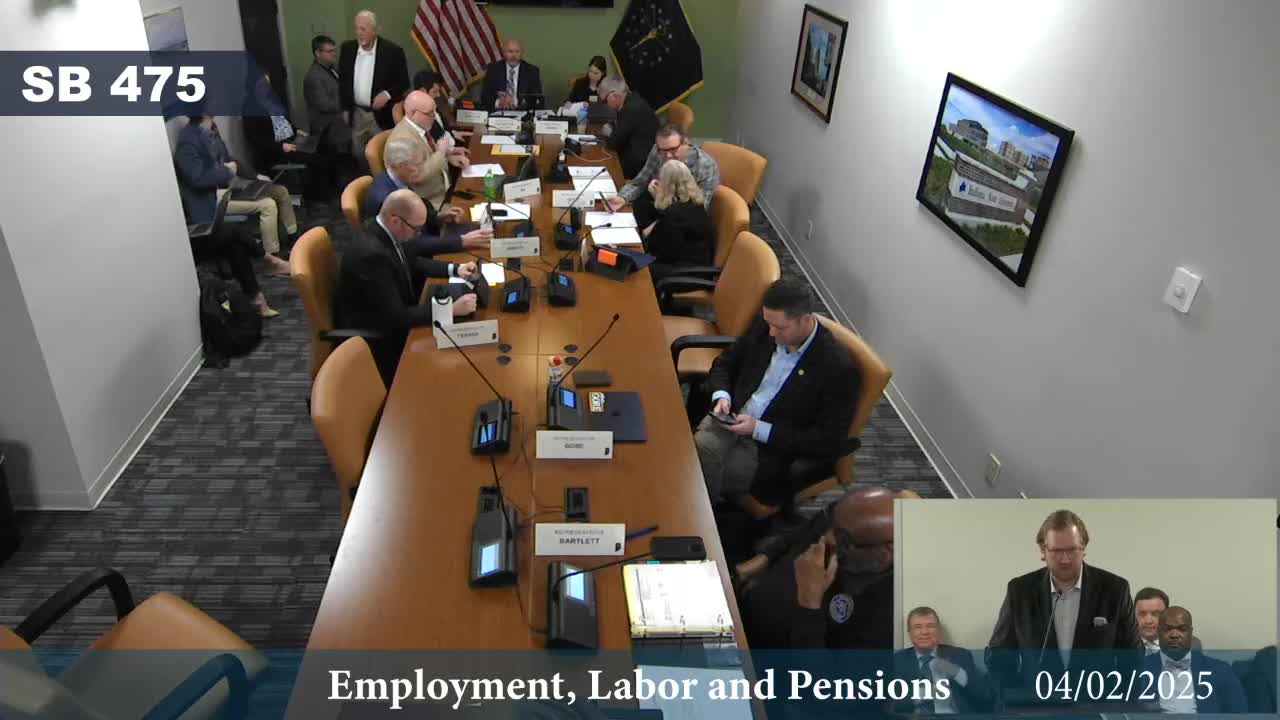
Senate Bill 475, as presented by Representative Manning, addresses physician noncompete agreements; after two amendments narrowing scope and refining definitions, the committee voted 8–2 to pass the measure as amended.
Representative Manning opened discussion of Senate Bill 475 as a measure aimed at reducing the use of noncompete agreements that he and supporters say can prevent physicians from staying in or moving to Indiana and can reduce patient access. Committee members considered Amendment No. 2, which, in the record shown here, would apply aspects of the bill just to hospitals, and Amendment No. 3, which altered definitions in the bill. Both amendments were taken by consent and the sponsor explained he would continue work on definitional language.
Supporters included physician groups and independent-practice representatives who argued that noncompetes impede the ability of independent medical practices to recruit and retain doctors for rural and underserved communities. Steve Freeland, chief executive of Cancer Care Group, described recruitment challenges and an example in which a newly recruited resident left after receiving a much higher offer from a large health system. William Pond, president of the Indiana State Medical Association, said noncompetes reduce competition, can raise local costs when temporary contract labor is used to replace displaced physicians, and remove resources from communities.
Several health-care industry representatives and the state’s health secretary also testified. Gloria Sachdev, Secretary for Health and Family Services representing the governor, said the state faces a shortage of primary-care physicians and argued that competition is necessary to improve access. The Indiana Hospital Association’s Luke McNamee testified neutrally and asked for clearer statutory definitions of what the bill would and would not cover (for example, non-solicitation and non-disclosure clauses vs. time/distance noncompetes). Some physician-owned groups said they supported the amended version because it levels an uneven playing field in recruitment; others cautioned that a broad ban could harm physician-owned practices.
Opponents, including the Indiana Chamber, recommended codifying existing case law on enforceability rather than a categorical ban. The hearing closed with Representative Manning urging passage; the committee approved the bill as amended by an 8–2 vote.
Action recorded: Amendments 2 and 3 taken by consent (Amendment 2 to apply to hospitals; Amendment 3 revising definitions). Motion to pass as amended approved 8–2.
The transcript records a mix of supportive and opposing testimony, multiple requests for clearer definitions and concerns about unintended consequences; the bill advanced out of committee as amended.