Get Full Government Meeting Transcripts, Videos, & Alerts Forever!
Get email alerts on the Domestic Violence topic
No spam. Unsubscribe anytime.
Panel approves requiring warrant checks when serving protective orders; advocates express concerns
Summary
House Bill 14‑33 would require law enforcement to check for active arrest warrants when serving an order of protection for domestic violence, aiming to protect officers and the public. Civil‑rights and parental‑equality advocates warned the requirement could be weaponized in civil proceedings and disproportionately affect respondents.
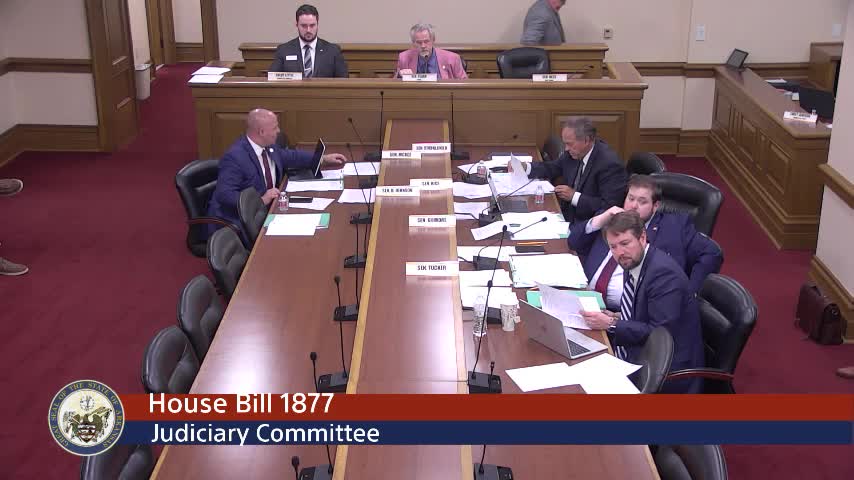
The Senate Judiciary Committee voted to pass House Bill 14‑33 after sponsors described the measure as an officer‑safety and court‑safety provision and opponents raised concerns about civil‑law processes.
Representative Kendra Moore, District 23, told the committee the bill requires a law enforcement officer serving an order of protection to check for active criminal arrest warrants for the respondent before service; the sponsor said the provision is intended to promote officer, community and court safety and that the measure had been vetted with the Administrative Office of the Courts, the Judicial Council, the Arkansas Police Chiefs Association and the Arkansas Sheriffs Association.
Opponents, including Brian Vandiver of Arkansas Advocates for Parental Equality, said the bill conflates civil and criminal processes: orders of protection are civil injunctions and, critics argued, requiring warrant‑checks only on respondents (and not petitioners) could create unfairness and further incentivize weaponizing protective‑order filings in custody disputes. Vandiver also noted that many protective orders are contested at a subsequent hearing and sometimes rescinded.
Sponsor Moore told the committee the bill requires only an active warrant check and leaves arrest discretion to the officer; she said the change is meant to improve safety. After testimony, the committee moved and passed the bill by voice vote; the transcript records committee approval.