Get Full Government Meeting Transcripts, Videos, & Alerts Forever!
Get email alerts on the Alzheimers Treatment Coverage topic
No spam. Unsubscribe anytime.
Committee hears plea to cover new Alzheimer’s treatments for state employees; EBD warns of clinical risk and multi‑million dollar cost
Summary
Representative Julie Mayberry asked the Senate Insurance & Commerce Committee to require state employee plans to cover FDA‑approved disease‑modifying Alzheimer’s therapies; proponents gave personal testimony but EBD and clinical consultants warned of safety and fiscal risks.
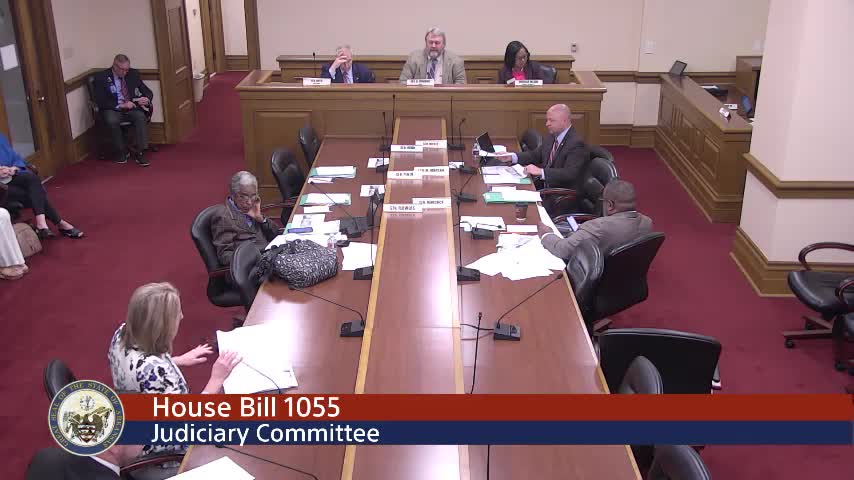
Representative Julie Mayberry brought House Bill 1055 to the Senate Insurance & Commerce Committee seeking to require state employee health plans to cover FDA‑approved disease‑modifying treatments for Alzheimer’s disease.
Mayberry said the newest Alzheimer’s treatments are “not treating symptoms, it’s actually treating Alzheimer’s,” and she urged committee members to provide state and school employees the same access that Medicaid, Medicare and veterans’ plans already offer.
A retired teacher, Steve Daniels, described his personal experience with an infusion‑based therapy. Daniels told the committee he receives the infusion monthly at a hospital infusion clinic, that Medicare covers roughly 80 percent of his treatment cost, and that the therapy has preserved his ability to recognize and interact with family. “This is not a cure… but this drug and this therapy… will extend my life dramatically for years, where I’ll still know their names and I’ll still know their faces for years to come,” Daniels said.
The Employee Benefits Division (EBD) and its clinical consultant raised safety and evidence concerns. Grant Wallace, EBD director, told the committee that adding the bill language would “subvert the process that the legislature has diligently designed around the review and approval of medications on our formulary.” Wallace said the bill’s draft would require automatic coverage “according to the standards of guidance established by the United States Food and Drug Administration,” which EBD argued would remove the statutory review steps EBD and legislative oversight currently follow.
Trey Gardner, director of the Evidence‑Based Prescription Drug (EBRX) program that advises EBD, summarized clinical reviews and safety data used by the committee’s clinical committee: he told senators that in clinical trials the drugs did not meet the trial threshold for a minimum clinically important difference on patient‑level measures, and he outlined safety risks observed in trials. Gardner quoted trial safety figures from the clinical reviews in the record: “For [the first drug], one in nine patients will experience brain swelling. One in 10 will experience brain bleeding, cerebral hemorrhage,” and for a newer agent “the rate was higher.” He said the clinical committee recommended not adding the medicines to the state formulary pending more evidence.
EBD provided an initial fiscal estimate of $2 million to $4 million should the plan adopt the new treatments; EBD told the committee the treatments it reviewed previously went through the normal EBD clinical review and were not approved in those reviews because the clinical committee judged risks and outcomes not to justify the price at this time.
Representatives of the Alzheimer’s Association and treating clinicians had planned to testify in committee; the committee record includes the association’s summary that FDA‑approved anti‑amyloid agents target the protein commonly called amyloid plaque and require confirmation of amyloid for patient selection. The association and the sponsor told the committee that qualifying patients are a small subset because the medications are intended for people in early, biomarker‑confirmed disease stages.
No final action was taken on House Bill 1055. The meeting ended without a quorum for further business, and the chairman said he could not accept a motion; the bill therefore did not receive a committee vote in this session record.
Why it matters: supporters argue the bill would equalize access for state and school employees to newly available disease‑modifying Alzheimer’s treatments; reviewers warned that early evidence is mixed, safety signals exist, and the state’s existing clinical review and formulary process is designed to evaluate such therapies before adding them to benefits.