Get Full Government Meeting Transcripts, Videos, & Alerts Forever!
Get email alerts on the Technology Ai topic
No spam. Unsubscribe anytime.
Committee passes bill criminalizing non‑consensual explicit deepfakes for adults, but defense lawyers warn about 'creation' language
Summary
House Bill 15‑29 would make it a crime to create or distribute sexually explicit deepfake imagery of an identifiable person without consent. The attorney general's office supported the draft; criminal defense groups warned the bill's 'creation' language could be unconstitutionally overbroad under First Amendment precedents.
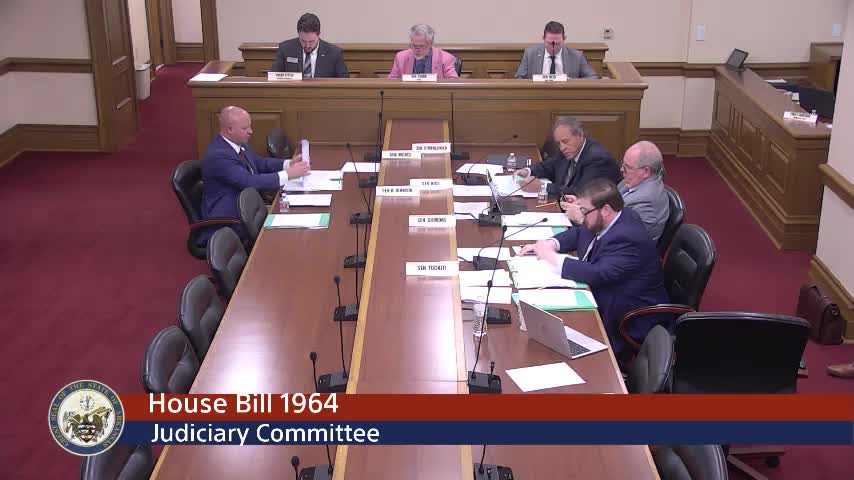
The Senate Judiciary Committee approved House Bill 15‑29 after testimony from the bill sponsor and both supporters and opponents.
Representative Steven Meeks, District 42, said the bill responds to emerging technologies that can place real people’s likenesses into explicit images or videos without consent. He said the measure criminalizes taking a picture of an identifiable person, placing it into sexually explicit material and distributing it without consent; penalties would range from a Class A misdemeanor for a first offense to a Class D felony for repeat offenses. Justin Brasher, senior assistant attorney general, told the committee the attorney general's office helped refine the language to reduce constitutional overbreadth and drew from federal statutes and case law including Ashcroft‑era precedents to target material an ordinary person would view as depicting the identifiable person engaged in explicit conduct.
Opposition testimony came from criminal defense attorneys who warned the bill as drafted could punish mere creation of an image that is never distributed. Jeff Rosenzweig of the Arkansas Association of Criminal Defense Lawyers said the provision criminalizing "creation or distribution" risks sweeping in private or artistic creations that are never shared and could be struck down under First Amendment standards; he urged deleting the "creation" language and penalizing distribution only.
Sponsor Meeks and the AG's representative said the text was narrowed to require both lack of consent and the type of depiction an ordinary observer would interpret as representing the identifiable person engaged in explicit conduct; proponents argued the statute as drafted is constitutional and necessary to address sextortion and other harms. After closing arguments the committee moved to pass the bill; the transcript records committee approval by voice vote and an expressed fiscal/penalty table (Class A misdemeanor: up to 1 year and $4,500 fine; Class D felony: up to 6 years and $10,000 fine) was provided by a committee member.