Get Full Government Meeting Transcripts, Videos, & Alerts Forever!
Get email alerts on the Government Conduct topic
No spam. Unsubscribe anytime.
Board approves repeal of Chapter 12X on first reading after split vote; supervisors warn of unintended impacts on small businesses
Summary
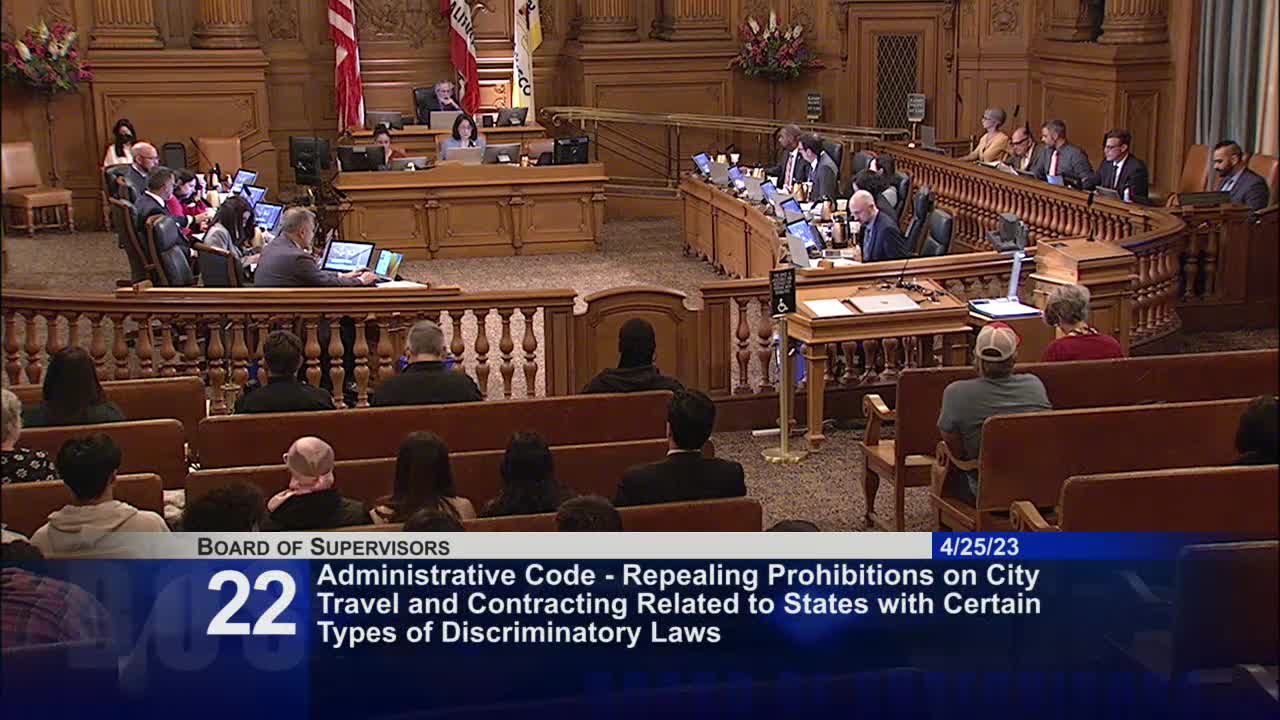
On April 25 the San Francisco Board of Supervisors voted 7–4 on first reading to repeal Chapter 12X — the city’s prohibition on certain travel and contracting with states with laws the city found discriminatory. The measure prompted heated debate about symbolic action versus practical effects on contracting and small businesses.
The San Francisco Board of Supervisors voted on first reading on April 25 to repeal Chapter 12X, the city’s ordinance that restricted city‑funded travel and city contracts with entities headquartered in states with laws the board deemed discriminatory. The ordinance passed first reading by a roll call of seven yes and four no votes; supervisors Melgar, Preston, Walton and Chan voted against the repeal.
Supporters of the repeal argued that Chapter 12X had become administratively burdensome and failed to change the targeted states’ laws. Supervisor Matt Dorsey said the policy “made competitive bidding less competitive” and was performative rather than effective at changing state practices. Supervisor Rafael Mandelman said the ordinance raised government costs and generated complexity in waiver administration, and that other channels were more effective for advocacy.
Opponents warned of potential harms to small and disadvantaged local businesses and said the board had not fully analyzed the repeal’s consequences. Supervisor Walton said she opposed the repeal in committee and warned it could have “unintended consequences” for small businesses and the protected populations the law aimed to support. Supervisor Chan also voiced skepticism and said she intended to work to “identify ways to change this” if the repeal passed.
The measure’s first reading passed, and several supervisors noted they would return to the issue with amendments or follow‑up policy work to protect locally owned small businesses while addressing the burdens cited by repeal proponents.
Actions recorded in the transcript included the roll call on item 22 (the ordinance repeal) and the formal passage on first reading. The board indicated it would monitor impacts and consider further refinements before final adoption.