Get Full Government Meeting Transcripts, Videos, & Alerts Forever!
Board rejects appeals, approves 3333 California Street development after lengthy hearing over trees, historic preservation and housing
Summary
After a consolidated public hearing, the Board of Supervisors rejected appeals of the 3333 California Street EIR and approved the conditional-use authorization and tentative map for the 744-unit mixed-use project.
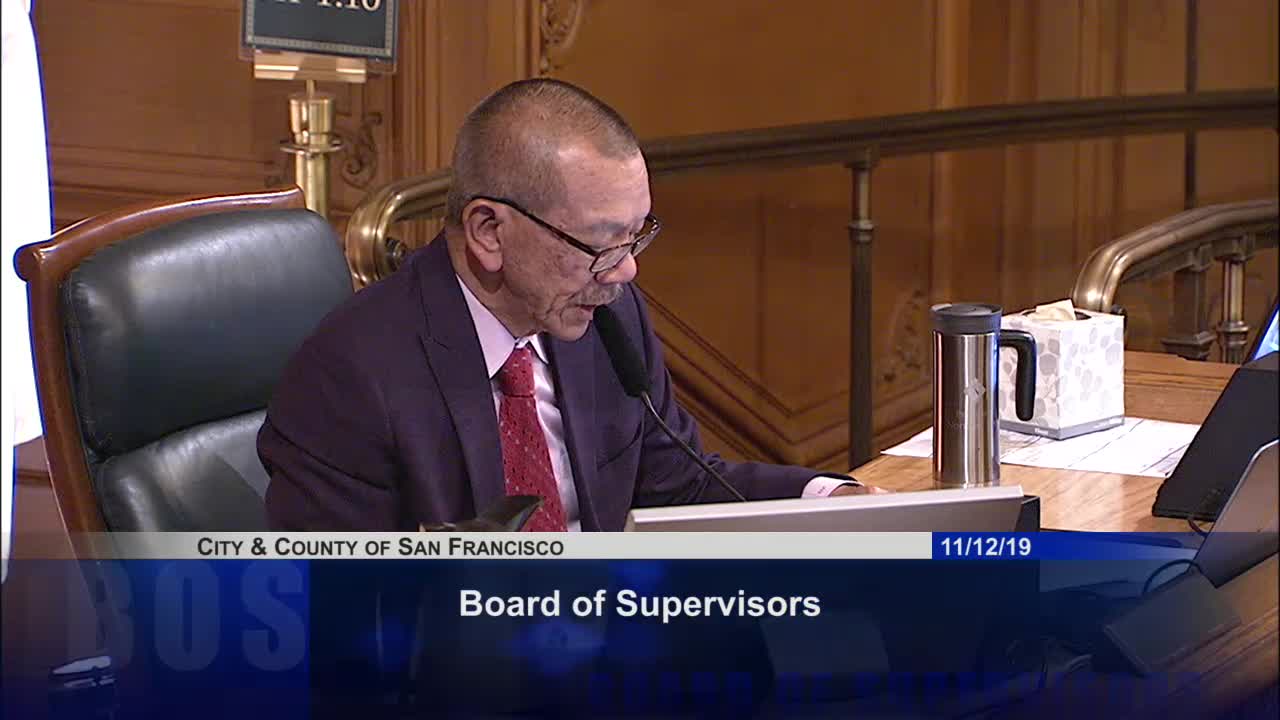
The Board of Supervisors on Nov. 12 denied appeals of the Planning Department’s Environmental Impact Report (EIR) for the 3333 California Street project, and approved related land-use actions — including the conditional-use authorization, tentative map and a package of ordinances establishing a special use district and a development agreement — after a consolidated public hearing that lasted several hours.
The proposed project, led by Laurel Heights Partners/Prado Group, would redevelop the former Fireman’s Fund/UC offices into a mixed-use complex that proponents say will deliver 744 housing units, a large on-site childcare center and 186 units of on-site subsidized senior housing, alongside privately owned publicly accessible open space and neighborhood-serving retail.
Appellants led by the Laurel Heights Improvement Association argued the EIR and approvals were flawed in multiple ways, focusing on two main themes: first, that the EIR failed to study a reasonable range of alternatives that would preserve historic landscape and key architectural features of the existing office campus; and second, that the project would remove hundreds of mature trees and cause irreversible environmental harm to a site with recognized historic significance.
Planning staff and the developer disputed those claims. The Planning Department told the board the certified EIR analyzed a reasonable range of alternatives — including two full-preservation and two partial-preservation options — and that the alternatives submitted by the appellants were “considerably similar” to alternatives already evaluated. Department staff also said an independent technical review by Public Works found the appellants’ proposed alternatives were not physically feasible as presented and would not yield the same number or unit mix of housing.
On trees and canopy impacts, the city’s Bureau of Urban Forestry and Public Works testified that 15 street trees and 18 “significant” trees are within Public Works’ jurisdiction and would be removed under the current public-right-of-way improvements, with the project proposing 88 new street trees and 49 “significant” private trees as replacement plantings. Project sponsor materials presented a broader landscaping plan that calls for retaining 11 “key” trees and ultimately increasing the site tree count from a reported 226 to roughly 512 trees after buildout; the sponsor and several planning witnesses said many removed trees are in poor condition and that replacement saplings and new planting areas would expand canopy over time.
Speakers at the hearing were sharply divided. Dozens of neighbors, environmental advocates, preservation specialists and residents urged the board to reverse the certifications, saying the EIR omitted feasible preservation measures, undercounted shadow and open-space impacts, and failed to…
Already have an account? Log in
Subscribe to keep reading
Unlock the rest of this article — and every article on Citizen Portal.
- Unlimited articles
- AI-powered breakdowns of topics, speakers, decisions, and budgets
- Instant alerts when your location has a new meeting
- Follow topics and more locations
- 1,000 AI Insights / month, plus AI Chat