Get Full Government Meeting Transcripts, Videos, & Alerts Forever!
Get email alerts on the Housing And Finance Introductions topic
No spam. Unsubscribe anytime.
Supervisors introduce measures on municipal development corporation, Airbnb tax compliance and a housing-balance tracking plan
Summary
Supervisors introduced three policy items: a request to draft an ordinance to study creating a municipal development corporation (as a step toward a public bank), proposed contingency for Airbnb law implementation tied to back tax collection, and a housing-balance measure to track 10-year rolling production toward a 33% affordable housing goal.
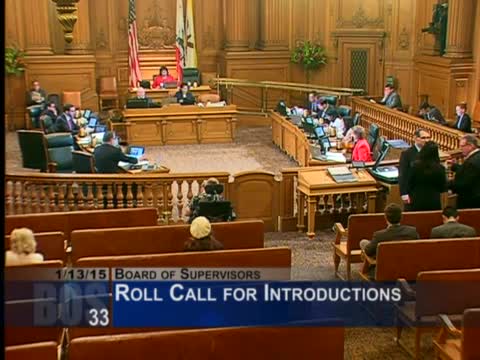
Several supervisors used Jan. 13's new-business introductions to advance longer-term policy initiatives.
Public bank / municipal development corporation (Supervisor John Avalos): Avalos asked the City Attorney to draft legislation to study forming a non-depository municipal development corporation (MDC) as a manageable first step toward a public bank. The MDC would be a non-depository financial institution that could fund projects by issuing medium-term notes and initially focus on affordable housing financing. Avalos said legal work over three years indicates charter cities have authority to create a bank but that full public-bank creation is a mammoth undertaking; the MDC would lower regulatory barriers and provide a stepping-stone to a public bank.
Airbnb tax compliance (Supervisor David Campos): Campos introduced an ordinance making implementation of the City's short-term rental (Airbnb) law contingent upon collection and payment of back taxes owed to the City and County of San Francisco, and requested a hearing on the Treasurer-Tax Collector's efforts to collect unpaid transient occupancy taxes from short-term rental platforms and hosts.
Housing-balance tracking and neighborhood stabilization (Supervisor Jane Kim): Kim reintroduced housing-balance legislation to track a rolling 10-year count of affordable housing production compared with market-rate units, with a 33% affordable production goal (a figure aligned with redevelopment-area targets such as Transbay and Mission Bay). The measure would require Planning Department monitoring citywide and by district and would require the Mayor's Office of Housing and Community Development to propose budget measures if the city falls behind the target by March of each year.
Why it matters: The three introductions touch different parts of San Francisco's housing and fiscal policy toolbox: Avalos's request begins a multi-year path toward local financing capacity; Campos's intro seeks to enforce tax compliance as a precondition for regulatory implementation; Kim's housing-balance tracking aims to create an annual performance metric tied to budget responses to reach an explicit affordability goal.
Next steps: All three items were introduced. City Attorney and relevant departments were asked to prepare drafting and/or committee analysis and to return for committee hearings and potential legislation during 2015. Supervisors indicated interest in advancing these items into the budget and ballot-year discussions.