Get Full Government Meeting Transcripts, Videos, & Alerts Forever!
Get email alerts on the Short Term Rentals topic
No spam. Unsubscribe anytime.
Board advances first-ever San Francisco short-term rental rules after hours of amendments and debate
Summary
San Francisco supervisors on Tuesday advanced an ordinance to regulate short‑term residential rentals, voting on first reading to create a city registry, new reporting and enforcement duties for hosts and platforms, and limits intended to protect rent‑regulated housing.
San Francisco supervisors on Tuesday advanced an ordinance to regulate short-term residential rentals, voting on first reading to create a city registry, new reporting and enforcement duties for hosts and platforms, and limits intended to protect rent‑regulated housing.
The measure, introduced by Supervisor David Chiu, would let permanent residents host part-time while prohibiting year‑round, unhosted commercial use of housing; it also consolidates enforcement in the Planning Department, requires hosts to register and pay applicable taxes, and includes targeted exclusions for below‑market‑rate and subsidized housing.
Why it matters: Supervisors described the bill as a response to what they called an unregulated market that has “popped out of the shadows,” with potential effects on the city’s already strained housing supply and neighborhoods. Supporters said the rules balance protection of long‑term housing with limited opportunities for residents who rely on hosting income; critics and several amendments focused on enforcement, exemptions for deeply subsidized housing, and whether large hosting platforms should be required to clear past tax liabilities before the law takes effect.
What the board approved and what remains unresolved
Supervisors adopted the ordinance on first reading as amended and approved a package of non‑substantive technical changes on the floor. The adopted version keeps the core structure Chiu outlined: a registration requirement for hosts, a requirement that hosts pay applicable taxes, updated enforcement authority for the Planning Department, and targeted exclusions for some publicly restricted housing. The legislation sets a “permanent resident” threshold — living in San Francisco at least nine months per year — as the baseline for who may host under the permitted, hosted model.
Supervisor David Chiu, the item sponsor and president of the Board of Supervisors, said during the hearing: “The status quo is not working,” and described the bill as “a regulatory and enforcement structure” aimed at preventing the conversion of housing into de facto hotels. He told colleagues the package was the product of roughly two years of work with tenants, landlords, platform representatives and city departments.
Key policy provisions described during debate
- Primary residence and residency test: The ordinance defines a permanent resident as someone who lives in San Francisco at least nine months per year and ties registration eligibility to that standard. Chiu said the nine‑month test is intended to exclude year‑round commercial use and to allow short absences for students, seniors and working residents.
- Registry, reporting and enforcement: Hosts would be required to register with the city and to include a city registration number in any online advertising. The Planning Department would consolidate enforcement authority for chapter 41A cases; administrative penalties increase for repeat violations. Oakland‑style platform reporting requirements were discussed and the ordinance holds hosting platforms responsible for certain notice and consumer‑facing obligations.
- Taxes and financials: The ordinance requires hosts to pay applicable taxes and includes a provision added on the floor directing that the law not go into effect until the Treasurer certifies that hosting platforms are current on any outstanding transit‑occupancy taxes. Supervisor David Campos proposed the treasurer certification amendment; it failed to pass on the floor and was referred for additional committee review (see Actions). Chiu and other supervisors repeatedly stressed that the bill does not eliminate back‑tax obligations for hosts or platforms.
- Affordable housing and public subsidy exclusions: The ordinance, as amended in committee and on the floor, excludes below‑market‑rate (BMR) units, single‑room‑occupancy residential hotels and other income‑restricted housing from eligibility for short‑term rentals. Supervisors debated language and scope; the city attorney advised that detailed, narrowly drafted language would be needed to capture the intended universe of subsidized units.
- Private enforcement: After committee debate, the board adopted a narrowed private right of action for qualified housing nonprofits to seek injunctive relief in certain rent‑controlled buildings. The adopted language limits plaintiffs in time and scope, requires some preconditions, and bars nonprofits from seeking civil penalties or monetary damages beyond attorney fees under limited circumstances. Supporters said this tool targets “egregious bad actors” who convert long‑term rentals into year‑round short‑term units; opponents warned it could produce costly litigation for small homeowners.
- Ellis Act evictions: The board adopted an amendment barring units that have been subject to Ellis Act evictions within the prior five years from qualifying as short‑term rentals. That amendment attracted broad support on the floor and passed.
Votes and floor process
- The ordinance passed first reading as amended (roll call: 7 ayes, 4 no). Recorded yes votes included Supervisor David Chiu, Supervisor Malia Cohen, Supervisor Mark Farrell, Supervisor Jane Kim, Supervisor Scott Wiener, Supervisor London Breed and Supervisor Eric Mar (note: some roll calls recorded abstentions/no votes or different placings on individual floor amendments). Several substantive amendments were referred back to the Land Use Committee and the Planning Commission for further review.
- On the floor supervisors debated and voted separately on a package of non‑substantive (technical) amendments that were adopted without referral. More substantive changes — including some affecting taxation certification, the scope of subsidized housing exclusions, and private enforcement details — were placed into a duplicated file for additional committee and Planning Commission review before final adoption.
Direct quotes from the hearing
- Sponsor David Chiu (President, Board of Supervisors): “The status quo is not working.”
- Supervisor David Campos (Board of Supervisors): “Pay your fair share.” (urging certification by the Treasurer that platforms have paid outstanding hotel/transit occupancy taxes)
- Supervisor Scott Wiener (Board of Supervisors, Land Use Committee lead): “It’s time to bring it into the daylight and to put some basic parameters around it.”
Enforcement, implementation and next steps
Supervisors and city attorneys acknowledged the legislation will require substantial administrative work. The ordinance does not become operative immediately; Chiu said the law will not go into effect until early in the following year (the sponsor mentioned a February start as an implementation window) to give the Planning Department time to prepare registration systems and enforcement procedures. Several amendments adopted on the floor also instruct the Planning Department and the Mayor’s Office of Housing to monitor results and recommend changes after one year.
Votes at a glance (other items on the same agenda)
- Item 1 — Resolution asking city departments to develop policies prohibiting the transport and export of hazardous fossil fuels (crude, coal, petroleum coke) through San Francisco terminals: adopted (adopted by unanimous consent in floor discussion). Sponsor: Supervisor Malia Cohen.
- Item 7 — Ordinance amending the administrative code to add web series to film production fee schedules and to require notice for productions causing parking/traffic obstructions of four hours or more: finally passed by the board on the day’s consent actions.
- Item 8 — Resolution approving a contract amendment with AnsaldoBreda for light rail vehicle rehabilitation, shifting scope to rehabilitate 41 LRVs (total contract not to exceed $74,600,000): adopted (same‑house, same call). Sponsor: Supervisor Scott Wiener; floor remarks emphasized bridging reliability gaps until replacement Siemens vehicles arrive.
- Item 9 — Resolution authorizing application to the California Debt Limit Allocation Committee for residential mortgage revenue bonds (up to $60,000,000 aggregate principal) for Mission Bay South Block 7 West (5.088 Mission Bay Boulevard North): adopted (same‑house, same call).
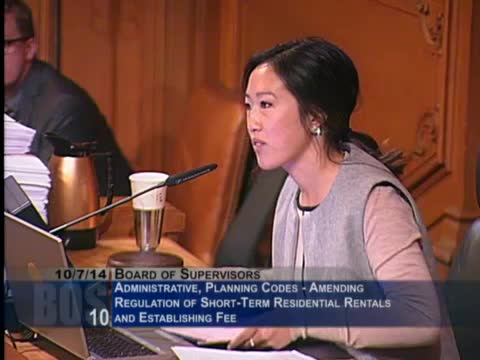
- Item 10 — Short‑term rental ordinance (this article’s subject): passed on first reading as amended (roll call: 7 ayes, 4 no); multiple substantive amendments were referred for further committee/Planning Commission review.
- Item 11 — Planning Code change re residential conversions of residential hotel units (chapter 41 / residential hotel conversions): adopted (roll call recorded as 11 ayes).
What supervisors and stakeholders said they will watch for
Supervisors repeatedly asked the Planning Department and the city attorney to refine enforcement language and ensure the department will have the staffing and technical systems to run a public registry, process complaints, and collect compliance data. Supporters framed the bill as an attempt to bring an already widespread market into regulation; critics warned about litigation risk, effects on small homeowners who host occasionally, and the capacity of the city to enforce the law without robust new resources.
Who spoke (selected)
Supervisor David Chiu, President, San Francisco Board of Supervisors (sponsor) Supervisor London Breed, San Francisco Board of Supervisors Supervisor David Campos, San Francisco Board of Supervisors Supervisor Malia Cohen, San Francisco Board of Supervisors Supervisor Mark Farrell, San Francisco Board of Supervisors Supervisor Jane Kim, San Francisco Board of Supervisors Supervisor Eric Mar, San Francisco Board of Supervisors Supervisor Katy Tang, San Francisco Board of Supervisors Supervisor Scott Wiener, San Francisco Board of Supervisors Supervisor Norman Yee, San Francisco Board of Supervisors Amy Chan, Legislative Aide (Office of Supervisor Chiu) Deputy City Attorney Marlena Burns (City Attorney's Office) Deputy City Attorney John Givner (City Attorney's Office) Scott Sanchez (Planning Department) Rosemary Bosque (Department of Building Inspection) Brad Benson (Port of San Francisco, participated during the hazardous materials item)
Clarifying details extracted from the hearing
- “Permanent resident” test in sponsor’s proposal: at least nine months per year in San Francisco (sponsor’s text on the record). - Tax revenue estimate cited by sponsor: $12–$15 million per year if platforms/hosts comply. - Proposed fines: daily fines of up to $1,000 for some violations were discussed in committee and referenced on the floor. - Liability/insurance: floor discussion included proposals to require $500,000 liability insurance (recommended by several supervisors) for hosts as a condition of registration. - Exemptions: Below‑market‑rate units, SRO residential hotels regulated under chapter 41, and units with other legal restrictions on subletting were identified for exclusion; language to exactly define the set of subsidized units was flagged as needing committee refinement. - Enforcement/administration: enforcement responsibility consolidated to the Planning Department (moved from Department of Building Inspection in the sponsor’s package); standards and staffing questions remain.
Community relevance
- Geographies named in debate: Bayview (cited by the sponsor as a community at risk from fossil‑fuel shipments), RH1D single‑family districts (several supervisors sought carve‑outs or special notification rules), Mission (tax/bond items and neighborhood mentions), Tenderloin (general public comment on housing pressures). - Impact groups: rent‑controlled tenants, homeowners who host, professional short‑term rental operators, neighborhood associations, affordable housing developers and administrators.
Provenance (selected evidence spans in transcript)
- Topic intro: Sponsor’s opening remarks introducing the short‑term rental ordinance and summarizing 2 years of stakeholder outreach (transcript timecode ~631.91–657.42; excerpt: “I want to start by thanking everyone today for what has been a long journey. Close to 2 years of intense work…”). - Topic finish: Final floor remarks and first‑reading vote on item 10 (transcript timecode ~11381–11398; excerpt: “On item 10 as non substantively amended multiple times… There are 7 ayes and 4 nos.”).
What to watch next
- The Land Use Committee and the Planning Commission will review the substantive amendments the board sent back, including the private enforcement language and the tax‑certification proposal. Those committee outcomes will determine the final shape of the ordinance when it returns for final adoption.
This account summarizes floor debate, recorded votes and committee referrals from the Board of Supervisors meeting; it does not attempt to adjudicate outstanding legal questions about tax liability or state preemption. For any legal or enforcement questions, the city attorney’s office and the Treasurer/Tax Collector remain the official sources.