Get Full Government Meeting Transcripts, Videos, & Alerts Forever!
Get email alerts on the Transmission Infrastructure topic
No spam. Unsubscribe anytime.
Board approves Transbay Cable licenses after debate on reliability, renewables and local generation
Summary
The San Francisco Board of Supervisors adopted CEQA findings and approved Port licenses and a right-of-way permit for the Transbay Cable project after extended questioning from supervisors about whether the cable, new in‑city combustion turbines and demand‑side measures are all required for the city’s future electric reliability.
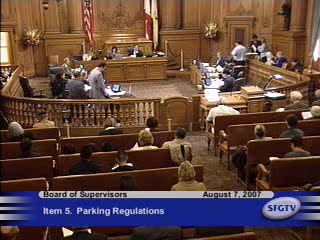
The San Francisco Board of Supervisors on Aug. 7 approved resolutions adopting California Environmental Quality Act findings and granting licenses and right‑of‑way permission for the Transbay Cable project, a high‑voltage transmission line that backers say will provide long‑term reliability for the city’s electrical system.
The board voted to adopt the CEQA findings and approve Port of San Francisco license terms and the city right‑of‑way permission for Transbay Cable LLC, with a package of technical amendments introduced by Supervisor Gavin Maxwell and explained by the City Attorney’s office. The approvals clear the way for a roughly 400‑megawatt high‑voltage direct‑current transmission cable that would run from a converter station outside the city to a receiving station in San Francisco.
The votes followed more than an hour of questioning by supervisors about whether the cable is needed now that the city plans to site in‑city combustion turbines and pursue aggressive energy efficiency and renewable programs. The debate centered on the independent system operator’s (Cal ISO) reliability analyses, the role of local generation in removing “reliability‑must‑run” (RMR) contracts on the Potrero (Potrero/Petrero) plant, and how renewable resources and demand‑side programs are counted for long‑term capacity.
Why it matters: Cal ISO and the city have said that a mix of transmission and in‑city generation is required to meet reliability targets through the next decade. Opponents and some supervisors pushed back, saying the city should rely more on energy efficiency and renewables and pressed for clearer assurances that Transbay will not undercut local renewable development or substitute for the city’s plan to retire older generation.
Key facts and approvals - Item 23: Board adopted CEQA findings for the Transbay Cable Project environmental impact report. - Item 24: Board approved Port of San Francisco license No. 14324 (use of submerged lands for installation; 4‑year term referenced in the file) and license No. 14325 (operation: 25‑year term with an option to renew 10 years) and related license payments and public benefit payments described to the board. - Item 25: Board granted revocable permission to Transbay Cable LLC to occupy a portion of the public right of way under Third Street for underground DC cable work, conditioned on payment of annual assessment fees. - The Port and SFPUC payment terms cited in the staff presentation included multi‑million dollar figures (documents read aloud in committee cited license payments and public benefit sums in the low‑ to mid‑millions and SFPUC payments in the tens of millions for long‑term arrangements). Those figures were presented in the record by Port staff.
What supervisors and agency representatives said Supervisor Daly (Supervisor Tom Daley in the transcript) pressed agency representatives to explain why Transbay is needed in addition to in‑city combustion turbines and aggressive conservation. “I’m wondering why not specifically link approval of the Transbay cable to a position against the siting of peaker plants,” Daly said, citing a technical study he had read.
Brad Benson, Special Projects Manager with the Port of San Francisco, and Laura Spangen (San Francisco Public Utilities Commission) responded that multiple analyses and letters from the California Independent System Operator (Cal ISO) indicate that local combustion turbines plus transmission upgrades together form the action plan necessary to address San Francisco’s load‑pocket reliability needs. “The ISO has clearly stated in writing, multiple times, that the combustion turbines … are absolutely needed, for in‑city generation to take away the reliability must‑run status from the Merritt Power Plant,” Laura Spangen said.
Julie Gill, representing the California Independent System Operator, told the board the ISO’s planning assumed successful siting of the city’s combustion turbines as part of the action plan and said Transbay was evaluated as the next transmission project needed to meet reliability past February 2010. Gill summarized the ISO’s approach: planning for contingencies by assuming the loss of the largest generator and the largest transmission line and then providing a mix of transmission and generation to meet that contingency scenario.
City counsel Deputy City Attorney Cheryl Adams explained amendments proposed by Supervisor Maxwell to clarify that further local planning and CEQA review would be required if subsequent city projects move forward: “What this does is clarifies that additional planning review and CEQA review would will be necessary,” Adams said when describing the wording change inserted into the draft resolution.
Points of contention and clarifications - Renewable energy and demand‑side programs: Several supervisors, including Supervisor Mercarini and Supervisor McGoldrick, pressed Cal ISO and SFPUC staff on whether renewable projects and energy‑efficiency measures were being counted as firm capacity and on how much demand reduction the city’s programs can realistically deliver. Cal ISO and SFPUC officials replied that renewable generation is not counted as “firm” capacity in the same way dispatchable generation is, though a large transmission line such as Transbay would facilitate importing renewable power to serve the city. - Rate‑of‑return and consumer costs: Supervisor McGoldrick asked about the project’s internal rate of return and questions raised by the California Public Utilities Commission in prior reviews; Port staff noted that Federal Energy Regulatory Commission (FERC) jurisdiction governs approval of costs and rates for the interconnection and that many cost‑recovery questions are outside the city’s license contract authority. - Local preference and use of imported power: Supervisor Mercarimi and others said they were not yet convinced the cable benefits the city directly and asked how the city would avoid becoming dependent on imports rather than building local renewables. SFPUC staff said in‑city generation, when available, will be dispatched first and that the commission supports building local renewables alongside the transmission upgrade.
Roll call and outcome The board took a roll‑call vote on items 23–25 (item 24 approved as amended). The roll call recorded: Supervisor Daley — No; Supervisor Dufty — Aye; Supervisor Elsberg — Aye; Supervisor Jew — No; Supervisor Maxwell — Aye; Supervisor McGoldrick — Aye; Supervisor Mercarimi — No; Supervisor Peskin — Aye; Supervisor Sandoval — Aye; Supervisor Alioto Pier — Aye; Supervisor Ammiano — Aye. The measures were adopted as recorded.
Next steps and conditions The City Attorney’s office and staff emphasized the approvals do not obviate further local planning or environmental review for any subsequent city projects: the Maxwell amendment inserted language making clear that any city decisions to proceed with related projects would be “subject to environmental review.” The Port’s and SFPUC’s separate license agreements include payment terms and public‑benefit commitments spelled out in the record.
Why this remains unsettled Supervisors noted the decision leaves policy questions unresolved: whether the city can rely primarily on energy efficiency and renewables to meet future growth; precisely how much new in‑city generation is still needed; and whether the financial terms and rate‑of‑return implications have been sufficiently scrutinized for local ratepayers. Board members also asked staff to continue monitoring whether the Transbay project and local renewable programs are implemented in ways that preserve the city’s stated environmental and reliability goals.
Ending note The board’s approvals set the legal framework for the Transbay Cable licenses and the right‑of‑way permit to proceed, but supervisors asked agencies to return with more detailed planning and financial information going forward.