Get Full Government Meeting Transcripts, Videos, & Alerts Forever!
Get email alerts on the Capital Improvement Plan topic
No spam. Unsubscribe anytime.
Harrington reviews 10-year capital improvement plan; commissioners weigh 1% vs. 2% sales-tax options for streets
Summary
City staff and consultants presented a 10-year capital improvement plan focused on street projects and funding scenarios. Consultants said a 1% dedicated sales tax would fund identified projects over 10 years, while a 2% rate could complete them in about five years and provide annual rehabilitation funding sooner.
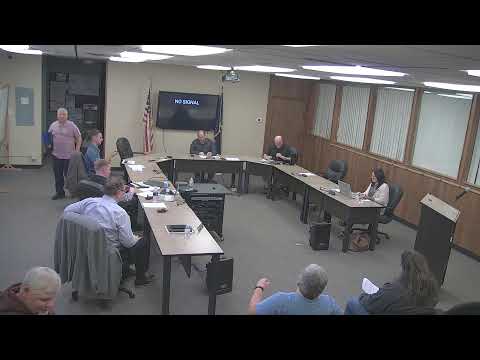
City commissioners discussed a preliminary 10-year capital improvement plan (CIP) that prioritizes street and related utility projects and examined sales-tax funding scenarios presented by engineering consultants.
Lance Onstock of Professional Engineering Consultants summarized the identified street projects, which include intersection and surfacing work on Fifth Street, a full reconstruction of a portion of Walnut Street (to address an undersized water line), mill-and-overlay work on Broadway Street, and localized repairs on Sturgis Street and Commercial Drive. Onstock said project line-item estimates were developed using recent local bid prices and the city's 2024 comprehensive and strategic plans as inputs.
Onstock presented two primary funding scenarios: maintaining the city's dedicated 1% local sales tax for capital projects or increasing that dedicated portion to 2%. He said the 1% scenario would allow the city to complete the projects identified in the packet over the next 10 years but would not provide a recurring annual rehabilitation or grant-match budget until later in the decade. The 2% scenario, he said, would largely fund the identified projects within about five years and begin a regular annual rehabilitation budget of roughly $300,000'$400,000 thereafter. Onstock noted projections assume current sales-tax collections and cautioned that trends should be monitored.
Commissioners asked whether gravel streets on the west side and an extension of Sturgis Street to Third Street could be added; Onstock said those options can be developed as alternates and that gravel-to-paved conversions are materially more expensive and typically require curb-and-gutter to avoid edge deterioration. Commissioners also discussed special-assessment options for individual streets, chip-and-seal alternatives, and trade-offs between paving new sections versus keeping existing pavements in good repair.
No formal vote was taken on tax rates during the meeting. Staff said the city manager intends to bring a proposal back for a vote at the second meeting in May if the commission wants to place a sales-tax question on the November ballot; staff noted statutory notification to the county would be required 90 days before an election if commissioners decide to proceed. Commissioners also discussed the option of a time-limited (for example, 10-year) dedicated sales tax versus a permanent rate.
Onstock described the CIP's identified project total in the packet as approximately $1.6 million for the initial list; the presentation emphasized Broadway and Walnut as the largest ticket items. Staff recommended the commission decide whether to ask voters for a sales-tax increase to accelerate projects and to provide an annual rehabilitation line item.