Get Full Government Meeting Transcripts, Videos, & Alerts Forever!
Get email alerts on the Short Term Rentals topic
No spam. Unsubscribe anytime.
Saratoga Springs council enacts UDO text amendment allowing short‑term rentals as accessory uses
Summary
After completing a State Environmental Quality Review, the Saratoga Springs City Council adopted Local Law No. 4 (2025) to permit short‑term rentals as accessory uses in several zoning districts; the measure passed with four votes in favor and one abstention.
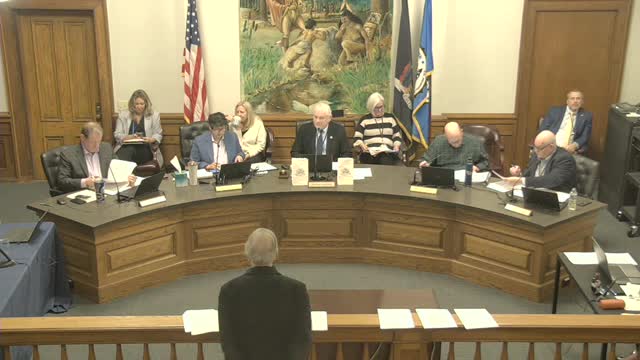
Saratoga Springs City Council on April 15 adopted a text amendment to the Unified Development Ordinance (UDO) that allows short‑term rentals as accessory uses in specified residential and mixed‑use zones, following a State Environmental Quality Review (SEQR) and a public hearing.
The council’s action follows a Type I SEQR review and a motion to issue a negative declaration, meaning the council found the proposed local law would not produce significant environmental impacts beyond those already addressed by existing rules. City land use counsel summarized the proposal as “enactment of local legislation allowing short term rentals as accessory uses in dwelling units in property zones residential, residential mixed use, commercial mixed use, commercial gateway, institutional.”
Why it matters: The amendment changes how the city regulates transient lodging by creating a zoning framework that makes short‑term rentals lawful, subject to registration and neighborhood protections. The measure is intended to give the city regulatory tools—registration, design review oversight, and enforcement mechanisms—rather than prohibit or ban accessory short‑term rentals outright.
Council action and votes - SEQR negative declaration: Motion to accept the SEQR negative declaration was offered by Commissioner Dylan Moran; the motion passed with four votes in favor and one abstention (Samir Sanghi). The council then approved a formal negative declaration resolution consistent with those findings. - Enactment of Local Law No. 4 (2025): Commissioner Dylan Moran moved to enact the UDO text amendment. The motion passed with four votes in favor and one abstention. The council incorporated the planning board’s recommendations and the Part 2 SEQR findings into its decision.
What the law does and limits - Scope: The local law permits short‑term rentals as accessory uses in residential, residential mixed‑use, commercial mixed‑use, commercial gateway and institutional zones. It does not change primary permitted land uses or rezone property. - Review and oversight: Short‑term rental uses will be subject to the city’s registration process and to review where applicable by the city’s design review/historic review processes; the council’s SEQR analysis noted that where properties lie in historic areas the review will limit potential impacts. - Enforcement and public‑safety considerations: During the SEQR discussion staff and councilors recognized the possibility of increased demand on municipal services (police, fire) and potential neighborhood impacts such as noise and light. The council’s finding treated those as manageable through the ordinance’s enforcement provisions; the SEQR form and the accompanying resolution record that identified impacts as “no or small” where mitigation and regulation apply. - Implementation: City staff told the council the registration system for short‑term rentals is planned to launch in mid‑May, and further administrative details will be handled through the permitting/registration process. (This timing was described by city staff during the meeting.)
Debate highlights and context City land use counsel walked the council through the SEQR Full Environmental Assessment Form Part 2, addressing 18 topic areas (land, water, historic resources, transportation, noise, community character, etc.). For most sections the staff recommendation and council’s findings recorded “no impact” or “no or small impact may occur.” The one area where the council recorded an affirmative but limited impact was historic and archaeological resources; staff recommended—and council accepted—that review by the city’s design/historic review board would reduce potential impacts to minimal levels.
During the public hearing period leading up to the votes, the council received public comment on related neighborhood concerns, including noise, policing, and housing affordability. Council members discussed those issues during the SEQR review and said enforcement tools in the UDO amendment would be used to address complaints.
What didn’t happen or remains undecided - The amendment regulates short‑term rentals by zoning and administrative processes; it does not change county or state statutes. The council did not adopt any immediate exemptions or caps on the number of rentals in particular neighborhoods. - The council’s vote included one abstention (Commissioner Samir Sanghi) but no recorded votes against the measures.
Looking ahead City staff will publish registration details and timelines as the mid‑May launch approaches. The council’s resolution and SEQR negative declaration become part of the project record and will be filed under the State Environmental Quality Review Act requirements.
"I move to enact the proposed local law number 4 of 2025," Commissioner Dylan Moran said when presenting the ordinance for a final vote.
City land use counsel summarized the scope of the proposed action during the SEQR review: "enactment of local legislation allowing short term rentals as accessory uses in dwelling units in property zones residential, residential mixed use, commercial mixed use, commercial gateway, institutional."