Get Full Government Meeting Transcripts, Videos, & Alerts Forever!
Get email alerts on the Wastewater Infrastructure topic
No spam. Unsubscribe anytime.
Advocates urge $20 million fund for private sewer lateral repairs as consent-decree work continues
Summary
Advocates, community groups and councilmembers at the April 15 Houston City Council meeting pushed the city to create a $20 million private sewer lateral repair program and greater transparency in implementation of the 2021 wastewater consent decree, saying low‑income neighborhoods continue to suffer sewage backups and health risks.
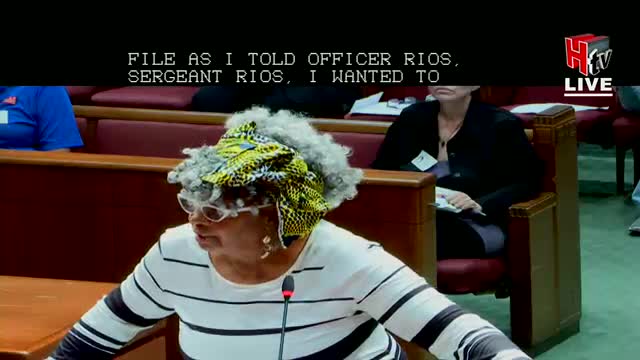
Advocates from Bayou City Waterkeeper, neighborhood groups and public-health organizers told the Houston City Council on April 15 that the city’s 2021 wastewater consent decree has not addressed private sewer laterals and that low-income communities continue to face raw‑sewage backups and related health risks.
Speakers asked the council to create a $20,000,000 private sewer lateral repair assistance program for low‑income homeowners and to publish regular, detailed reporting on consent‑decree spending and project timelines. "To ensure the consent decree benefits all Houstonians, we need a dedicated $20,000,000 program to assist these low income homeowners with these repairs," said Guadalupe Fernandez, representing Bayou City Waterkeeper.
Leah Blankenship, a University of Houston graduate student who has worked with Bayou City Waterkeeper, described repeated wastewater backups in households and urged the city to “close the sewage gap for homeowners at or below 100% of the state’s median household income.” Other speakers said private‑lateral failures often follow main‑line stress during large rain events and that repairs can cost thousands of dollars.
Speakers pointed to other U.S. and Texas jurisdictions that have launched assistance programs and asked the city to use Community Development Block Grant (CDBG) funds, federal and state grants, or stipulated‑penalty funds from decree noncompliance to create a dedicated program. "Austin and Baytown have successfully implemented assistance programs in our state for private sewer lateral repairs," Fernandez said. Several speakers also mentioned Detroit’s recent program as an example.
Council members responded that they will examine funding options during the budget process and engage Public Works about feasibility. Councilmember Sallie Alcorn said she would ask Public Works for more detail and explore grant leverage as the council approaches budget deliberations.
Speakers also requested clearer public reporting on where consent‑decree dollars are being spent and asked for an accessible map and schedule of projects. "Community members constantly ask us where these investments and repairs are going," Fernandez said. "We ask for regularly updated public breakdowns of project locations, timelines, budgets, and metrics."
No formal council action on a funding program was recorded at the meeting; speakers and several councilmembers said they will continue discussions and follow up with Public Works and other city departments.
Community groups said they will work with city staff to develop options that could use existing grant vehicles and administrative mechanisms without raising water rates.