Get Full Government Meeting Transcripts, Videos, & Alerts Forever!
Get email alerts on the Ancillary Uses And Live Entertainment Ordinance topic
No spam. Unsubscribe anytime.
Twentynine Palms planning commission backs ordinance to regulate ancillary businesses, live entertainment
Summary
The Planning Commission voted to recommend a package of development-code amendments that would clarify rules for ancillary businesses and create an annual licensing process for ancillary live entertainment, forwarding the draft ordinance and a CEQA exemption to the City Council.
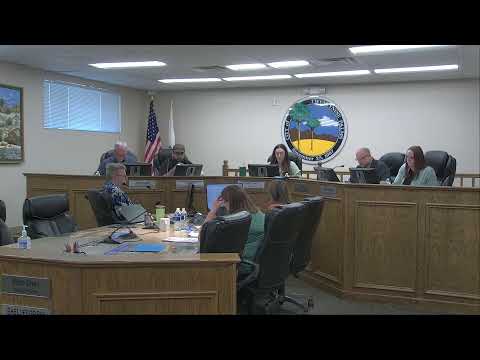
The Twentynine Palms Planning Commission voted unanimously to recommend to the City Council an amendment to the city's development code that would clarify rules for ancillary businesses and establish an annual license for ancillary live entertainment.
The commission adopted a resolution finding the proposal exempt from the California Environmental Quality Act and directed staff to bring a final ordinance and resolution to the City Council for adoption.
The package consolidates three related study-session topics into one ordinance amendment covering (1) ancillary business uses where a secondary business operates inside or as part of a primary business, (2) ancillary live entertainment provided by businesses whose primary use is not entertainment, and (3) related procedural changes. City staff said the proposal would reduce the level of land-use review for some secondary uses, add an entertainment license tied to the business license, and require safety reviews by building and safety, police and fire.
Keith, a city planning staff member who led the presentation, described ancillary businesses as 'products or services that an existing business offers that are not the primary function of the business' and said the ordinance would allow the review of a secondary business to be reduced one level of intensity from what would otherwise be required. He said the proposed approach would treat ancillary live entertainment as a licensed activity rather than a separate land-use permit: "What we're proposing here is a license process, not a land use permit." The licensing approach would be renewable annually provided the venue did not generate significant enforcement or public-safety issues.
Under the draft rules explained to the commission, ancillary commercial operations must be owned or operated by the primary business or entirely located within it; entrances and exits for the ancillary use must be within the primary business; ancillary uses may not exceed 25% of the primary business's floor area; and ancillary operations must have the same or fewer hours than the primary business. The staff presentation said ancillary entertainment licenses would be added to the existing business-license process, reviewed for safety and code compliance, and subject to city noise, lighting and occupancy rules. The draft excludes fraternal organizations (Elks, American Legion, Masons) and nonprofit educational institutions, houses of worship, schools, libraries and museums from the new license because those uses already include entertainment in the code.
During public comment, resident Carlos Blandon said he supported the ancillary-use proposal: "Ancillary use, I'm in favor." Sarah Lyons, vice chair of the Public Arts Advisory Committee and a board member of local business association Rediscover 29, urged the commission to keep fees low so small businesses are not priced out. Lyons said she and other business owners use venues at Corner 62 for events and recommended a maximum initial fee of $250 and a renewal fee of $100, and suggested a grace period for a July effective date: "I'm worried that the cost for the permits is gonna be a potential barrier of entry for small businesses." She also asked that the commission clarify how fee revenue would be used.
Commissioners and staff responded to those concerns by saying the fee schedule is intended to be cost-neutral and to cover administrative inspection costs. Staff noted the city would set fees and citations separately and that staff would return a resolution and corrected ordinance pages at the next planning commission meeting.
Motion and vote: Commissioner motioned to recommend the ordinance amendment to City Council, adopt the finding that the action is exempt from CEQA and forward a resolution; the motion was seconded and approved by roll call. Roll-call votes recorded: Commissioner Crucia 'Aye'; Commissioner Pahana 'Aye'; Commissioner Walker 'Aye'; Vice Chair Garcia 'Aye'; Chair Keir 'Aye'. The commission also approved placing the resolution on the next meeting's consent calendar for formal transmittal to the council.
Background and next steps: Staff told commissioners the changes resulted from multiple workshops and two business-community meetings held since the prior year and that they will correct paragraph numbering and wording (changing "possible permits" to "review") before preparing the final resolution for council consideration. City staff will prepare the ordinance, the accompanying resolution, and a proposed fee schedule for future consideration by the City Council.
Votes at a glance: - Motion: "Recommend this to the City Council and that it's exempt from CEQA, adopt with the changes and bring forth the resolution." Outcome: approved by roll call; yes votes recorded from Commissioners Crucia, Pahana, Walker, Vice Chair Garcia and Chair Keir.