Get Full Government Meeting Transcripts, Videos, & Alerts Forever!
Get email alerts on the Budget topic
No spam. Unsubscribe anytime.
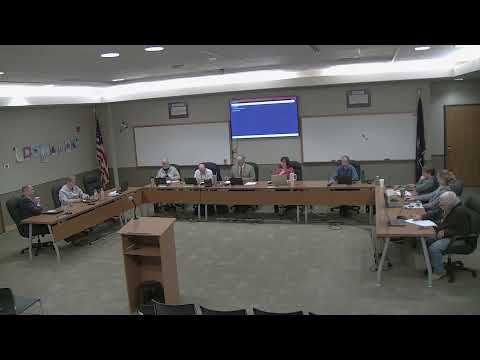
Dover Area School District debates tax, fund-balance options as budget shortfall looms
Summary
Board members spent the meeting’s longest segment reviewing budget scenarios showing a $2.6 million gap, weighing a modest tax increase versus deeper cuts and use of reserves amid uncertainty over state aid and an Earned Income Tax proposal.
The Dover Area School District Board of Directors spent the bulk of its meeting Thursday reviewing budget scenarios that show a roughly $2.6 million increase in next year’s spending and debating how much of the district’s fund balance to use and whether to seek a modest tax increase.
Administrators, led by Chief Financial and Operations Officer Miranda Weaver and Dr. Hoeck, presented a matrix of options showing how variations in tax increases (0%–2.5%), savings from attrition and medical-premium reductions, and projected state “adequacy” funding would change the district’s fund-balance usage. Weaver said the presentation reflected updates since March, including two long-term substitutes added for fifth grade and a projected increase in the anticipated deficit.
Board members discussed three broad approaches: (1) adopt only identified automatic savings of about $227,000 (medical premiums and attrition) and take minimal additional cuts; (2) approve a set of strategic reductions in the roughly $177,000 range identified by one director; or (3) accept a deeper $400,000 package of cuts that would include field trips, some scholastic materials and athletic expenditures. No formal vote was taken; administrators said a final vote on tax settings will occur at the board’s May meeting.
Why it matters: the district’s choices affect classroom resources, the tax bills residents receive and the size of the fund balance available for one-time needs or unexpected costs such as litigation or capital shortfalls. Several directors urged caution about drawing down reserves given pending uncertainties, including litigation and a possible change in federal ESSER liquidation guidance.
Key discussion points - State funding and adequacy formula: Directors noted uncertainty about next year’s state subsidies. Weaver and Dr. Hoeck said preliminary calculations looked favorable but were not guaranteed. Board members repeatedly cautioned that the adequacy funding formula could return less relative share than a property-tax increase. - Earned Income Tax (EIT) and homestead/farmstead impact: Board members and staff discussed a possible EIT increase being considered by the county Tax Commission and how the homestead/farmstead rebate would offset property owners’ bills. Administration said preliminary household-level modeling showed a tipping point near $108,000 in household income where EIT would exceed the homeowner’s net property-tax change. Members noted renters and commercial property owners would not receive the homestead rebate, and landlords could pass costs to tenants. - Fund-balance scenarios and recommended ranges: Presentations showed multiple scenarios; individual directors voiced support for different targets. Several members favored limiting fund-balance use to about $1.0–$1.25 million and considering a modest 1%–2% tax increase this year to avoid a larger combined increase next year if EIT is adopted or state aid falls short. Other directors preferred 0% tax increase and deeper expenditure reductions. - Special-education and mandated costs: Directors and administrators described rising special-education placements and out-of-district costs as a major driver of budget pressure. The board discussed plans to bring some students back into in-district autistic-support classrooms to reduce outside-placement costs, but agreed savings per student would be relatively modest in the near term. - Timing and next steps: Administration requested clear guidance so staff can prepare materials for the May meetings. Weaver said May 20 is the likely date for the formal tax-setting vote; the board asked for a narrower set of options to present publicly (for example: 0% or 2% with a specified list of strategic cuts).
Quotes from the meeting "If the board is happy with any of these selections then...that would come between now and the first meeting of May; this is what the board will vote on on May 20," Miranda Weaver, Chief Financial and Operations Officer, said, explaining the timetable for decisions.
"I don't think it's wise to burn the fund balance...we need a 3-, 4-, 5-year projection," Director Emmick said, urging a long-term view.
"I don't want to raise taxes...but we may not be able to sustain 0% increases every year," Director Hogan said, arguing a modest increase now could avoid steeper hikes later.
Discussion-only versus direction and decisions - Discussion: The board held an extended discussion of options, trade-offs and the mechanics of homestead/farmstead rebates and EIT. No final tax rate was adopted during the meeting. - Direction: Several directors signaled informal consensus that the $227,000 automatic savings are accepted; members asked administration to return with a narrowed set of options (examples included 0% or 2% tax increases with strategic line-item reductions) at the May meetings. - Formal decision: None on taxes or cuts at this meeting.
Clarifying details - Projected district deficit discussed in the presentation: about $2.6 million (described by administration as the baseline increase over last year). This figure was repeatedly referenced in conversation but not adopted as a motion. - Automatic savings (not a cut): $227,000 (medical-premium decrease and attrition savings). - Additional savings scenarios discussed: $469,000 (an upper-range scenario referenced when modeling fund-balance outcomes) and a set of candidate line-item cuts totaling roughly $177,000 that one board member cited as a mid-range option. Specific line-item examples mentioned: elimination of a pool-robot purchase (~$3,000–$5,000), reduced scholastic-news subscriptions, reduced CTE travel, and one-time graduation sound-equipment funding. - Fund-balance usage options mentioned by board members: roughly $900,000 up to $2.6 million; many directors singled out $1.0–$1.25 million as a preferred cap given pending legal risks and possible ESSER uncertainty.
Community relevance - Geographic scope: Dover Area School District (local). The discussion directly affects local property taxpayers, renters, and district staff. - Impact groups: homeowners with homestead/farmstead exemptions, renters (who may bear pass-through costs), special-education students (placement and services), and general K–12 students affected by potential program cuts.
Speakers (selected, pulled from the meeting transcript) - Miranda Weaver — Chief Financial and Operations Officer, Dover Area School District (staff) - Dr. Hoeck — (administration; referred to as Doctor Hoeck in remarks) - President Conley — Board President, Dover Area School District (government) - Director Emmick — Board member, Dover Area School District (government) - Director Hogan — Board member, Dover Area School District (government) - Director McKinney — Board member, Dover Area School District (government) - Director Meese — Board member, Dover Area School District (government) - Director Whitmer — Board member, Dover Area School District (government) - Director Kindig — Board member, Dover Area School District (government) - Mr. Schram — guest/consultant referenced (appeared at Tax Commission meeting) (unknown) - Mr. Pratt — Solicitor (legal counsel) (government/contract)
Authorities referenced (as discussed in meeting) - Homestead/Farmstead Exemption (described in meeting as the vehicle by which EIT revenue is rebated to eligible property owners); referenced by staff and board as a statutory rebate mechanism (type: other; referenced_by: ["budget discussion","EIT discussion"]). - Earned Income Tax (EIT) county Tax Commission study (referenced as an external proposal being considered and as a factor for future budgets) (type: other; referenced_by: ["budget discussion"]). - ESSER liquidation deadline and federal guidance (U.S. Department of Education letter and subsequent litigation mention) (type: other; referenced_by: ["budget discussion","superintendent remarks"]).
Searchable tags: ["budget","taxes","fund-balance","EIT","homestead","special-education","Dover Area SD","Miranda Weaver"]