Get Full Government Meeting Transcripts, Videos, & Alerts Forever!
Get email alerts on the Student Educator Engagement topic
No spam. Unsubscribe anytime.
Wake County equity office details student-led programs, educator leadership and new initiatives
Summary
Wake County Public Schools’ Office of Equity Affairs outlined programs to build student and staff leadership — Ignite, LEAD and a new SPARK middle-school cohort — highlighted student projects such as CleanDrip and a new district speech-and-debate initiative, and described partnerships with universities and foundations.
The Wake County Public Schools Office of Equity Affairs presented a summary of student and educator engagement programs designed to build leadership, close opportunity gaps and connect students to community resources.
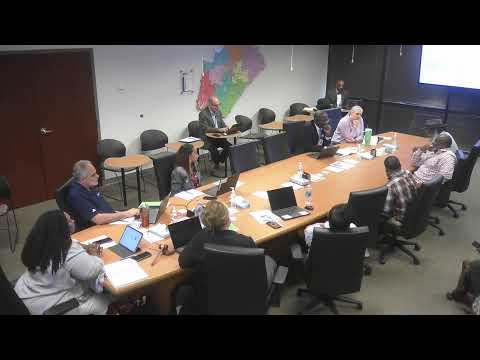
Dr. Janine Perry Campbell, director of the office of equity affairs for student and educator engagement, and Crystal Johnson, senior administrator, told the committee the office aligns its programs to the district strategic plan and North Carolina school-improvement indicators.
Programs described
- Ignite (high school): A three-year high school engagement program that trains five student leaders per participating school to identify an equity challenge and develop a practical solution. The office said past Ignite projects have included a student-created “Knight Scholar Zone” after-school tutoring/decompression space and a school clothing closet to support career-club participation. An end-of-year showcase and banquet for cohort announcements were planned for May 19.
- SPARK (middle school): A new middle-school engagement program scheduled to begin in fall 2025 with an initial pilot in the Northwestern area; the office said applications are open and cohorts will receive training, enrichment and a final showcase.
- LEAD (educator leaders): Leaders for Engagement, Advocacy and Development builds educator capacity through professional learning, including a December face-to-face session and monthly virtual meetings. The program includes participants from schools and central services and aligns work to North Carolina standards for school leaders and district policies.
Student-developed initiatives and examples
The office highlighted student-created projects, including CleanDrip — a school-based laundry assistance program intended to provide discreet laundry services and vouchers, partnered with community providers such as the Uplift laundry truck (based in Durham) and local laundromats. The office said CleanDrip is designed to protect student dignity while addressing attendance and participation barriers tied to access to clean clothing.
The Wake County Speech and Debate Initiative was presented as a district pilot to expand debate teams to schools without competitive programs. Presenters said the program secured external funding to pay teacher stipends, registration and transportation costs; they named the AJ Fletcher Foundation as a funder (a $15,000 grant) and said a smaller grant was received from a local foundation. A separate research partnership with NC State was described; presenters said they received a Spencer Foundation grant to support student-created accountability metrics, but the presentation contained inconsistent amounts for that grant and did not provide a single verified figure during the meeting.
Partnerships and grants
Presenters listed partnerships with NC State University, the AJ Fletcher Foundation and other local organizations. They said NC State is taking student researchers to a national education research conference, and that grants have supported stipend payments, travel and program costs. Specific grants cited in the presentation included $15,000 from the AJ Fletcher Foundation and $500 from a local fund referenced in the presentation; the Spencer Foundation support was described but the amount was not consistently stated on the record.
Impact examples
Dr. Perry Campbell said a LEAD teacher facilitated a professional development session that reached 80 faculty members and — according to the presenter’s calculation — could affect more than 600 students through classroom improvements. Other student projects described by speakers included initiatives around menstrual product access, translation training for office staff and clothing closets that expanded from high school to middle school.
Quotes and attribution
"Ignite has helped me grow as a leader, speak up about equity, and connect with students across the district," a student presenter said in a recorded testimony about her Ignite experience. Presenters emphasized the programs are districtwide and intended for all students: "There is no protective persons or one group that is targeted for our programs," the presenters said.
Next steps and board questions
Board members asked about inclusion of education support professionals (ESPs) in LEAD; presenters said principals select team members from school-improvement teams and agreed to specify that ESPs can be included. Members also asked for details on how the district will scale the programs, measure impact and market successes more broadly. Presenters said they are writing additional grants and will report program results at future committee meetings.
(Reporting based on presentation by Dr. Janine Perry Campbell and Crystal Johnson and student testimony at the Wake County Public Schools community engagement meeting.)