Get Full Government Meeting Transcripts, Videos, & Alerts Forever!
Get email alerts on the Adus Zoning topic
No spam. Unsubscribe anytime.
Planning Board backs accessory‑dwelling definition and recommends limits to districts
Summary
The board voted to recommend adding an accessory‑dwelling definition to the zoning bylaw and to limit where ADUs are allowed, aligning local language with the state statute and restricting ADUs in some commercial/industrial districts.
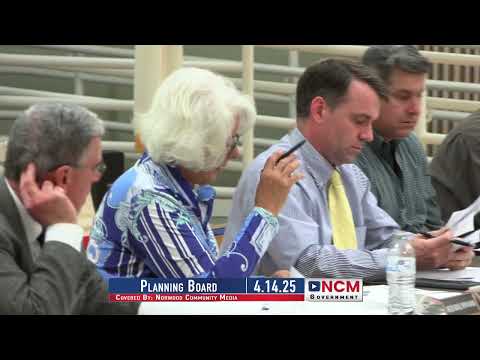
The Norwood Planning Board on April 14 voted to send a favorable recommendation to Town Meeting for an accessory‑dwelling unit (ADU) amendment that adds a statutory definition and specifies which zoning districts will allow ADUs.
Planning staff had circulated language drawn from the state statute and associated regulations; the board debated whether to adopt the full set of state regulatory details or to limit the local change to a definition and a notation in the use table. Some members argued the town should simply mirror the state statute and avoid adding detailed local controls that could conflict with future state rulemaking. Other members supported placing a clear indicator in Norwood’s use table so property owners can identify at a glance whether ADUs are permitted in their zoning district.
After discussion the board agreed to recommend adding the ADU definition into the zoning bylaw and to list ADUs as allowed (Y) in residential districts that already allow single‑family housing and not allowed (N) in specified commercial, industrial and special purpose districts. Board members asked staff to work with the Selectmen and Town Counsel so the warrant language presented at Town Meeting reflects the board's intended Y/N distinctions.
The board emphasized that most technical ADU requirements (size limits, entrances, occupancy) remain governed by the state law and implementing regulations; the local action is primarily a definitional and use‑table clarification for Town Meeting consideration.