
Olmsted County board approves minor revisions to septic-system ordinance after state compliance review
Get AI-powered insights, summaries, and transcripts
Sign Up Free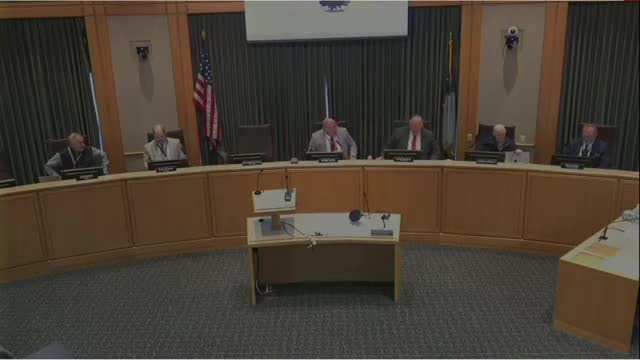
Summary
The Olmsted County Board of Commissioners approved two targeted amendments to the county's Subsurface Sewage Treatment Systems ordinance after a public hearing and a staff presentation explaining the changes are meant to align local language with state rules and clarify approval steps inside city limits.
The Olmsted County Board of Commissioners approved amendments to the county's Subsurface Sewage Treatment Systems (SSTS) ordinance following a public hearing during its regular meeting.
County staff said the changes remove language that the state has identified as inconsistent with state requirements and clarify the sequence of approvals for systems located inside municipal boundaries. Don Van Coolen, Olmsted County Planning Department, told the board the revisions remove a local requirement that effectively imposed additional licensing criteria beyond the state's licensing rules. "We're proposing to remove this whole section," Van Coolen said while walking through the draft changes.
The revisions are narrow: one change removes historical text and a local licensing requirement referencing additional local credentials for SSTS designers; the other deletes a paragraph that required applicants for new or replacement systems inside city limits to secure approvals from a city or township before obtaining a county permit. Van Coolen said townships do not have jurisdiction inside city limits, and the sentence is therefore inconsistent with current authority and with state rules.
During the public hearing no members of the public spoke for or against the changes. The board closed the hearing by voice vote and later approved the ordinance amendments by voice vote. No roll-call tally was recorded in the meeting transcript.
The staff presentation traced the local ordinance history back to about 1962 and noted past amendments in 1998 and 2015 that addressed designer licensing and added an advanced SSTS designer license. Van Coolen said the State notified the county that some local language was no longer consistent with state licensing rules and that the county's ordinance contained duplicated or unnecessary references to licensing requirements that are covered elsewhere in county code or state regulation.
Board members did not request further revisions and took no additional direction to staff beyond adopting the proposed language.
The ordinance amendments take effect as provided in county procedure; the transcript did not specify an exact effective date.