Get Full Government Meeting Transcripts, Videos, & Alerts Forever!
Get email alerts on the Public Safety Funding topic
No spam. Unsubscribe anytime.
Council declines to restore cut to Unified Fire Authority funding; facilitation process to proceed
Summary
After hours of debate about Special Service District carve-outs and canyon costs, Salt Lake County Council voted 5-3 (roll call: 3 yes, 5 no) against a motion to restore previously reduced funding for the Unified Fire Authority; the council and mayor’s office say a facilitator has been procured and a phased mediation process is scheduled.
Salt Lake County Council members voted against restoring a budget cut to the Unified Fire Authority (UFA) on Tuesday, leaving an earlier reduction intact while a facilitator-led dispute-resolution process moves forward.
Council debate centered on whether the county should reverse a reduction approved during fall budget deliberations before a promised facilitated discussion between UFA, county leaders and other stakeholders. Supporters of restoring the funding said public safety and ambulance capacity could be affected; opponents said the county must preserve leverage to bring UFA and partner municipalities to the negotiating table over long-running funding and rec-area carve-out issues.
Tony Hill, chief financial officer for UFA and the Unified Fire Service Area (UFSA), told the council the agency presented a budget that assumed the county’s prior decision to reduce funding, and that UFA balanced its proposed budget by increasing member fees rather than cutting operational expenditures. Hill said the draft budget presented to UFA’s board reflected the county’s prior direction and that UFA had already identified a roughly $670,000 expected reduction tied to rec-area contributions in the second half of the agency fiscal year.
Council members who opposed restoration emphasized the county’s constrained budget and the need to use the cut as leverage to prompt structural changes, including revenue options for resort areas such as Brighton and Bridle (Bridal) and clearer long-term arrangements between the county and UFA/UFSA. One council member said the cut equated roughly to the cost of an ambulance and described the dispute as a broader governance and payment-allocation issue rather than a straight call on frontline services.
The mayor’s office and council staff said an RFP to hire a facilitator was completed the day before the meeting; the facilitator contract contemplates a two-phase process. Phase one, covering UFA, UFSA and key stakeholders, is expected to conclude by July 1, and a second phase (to include a municipal services district, if needed) is anticipated later in the summer. Council members cautioned that, given the number of stakeholders and scheduling demands, those time frames will be difficult but are the target.
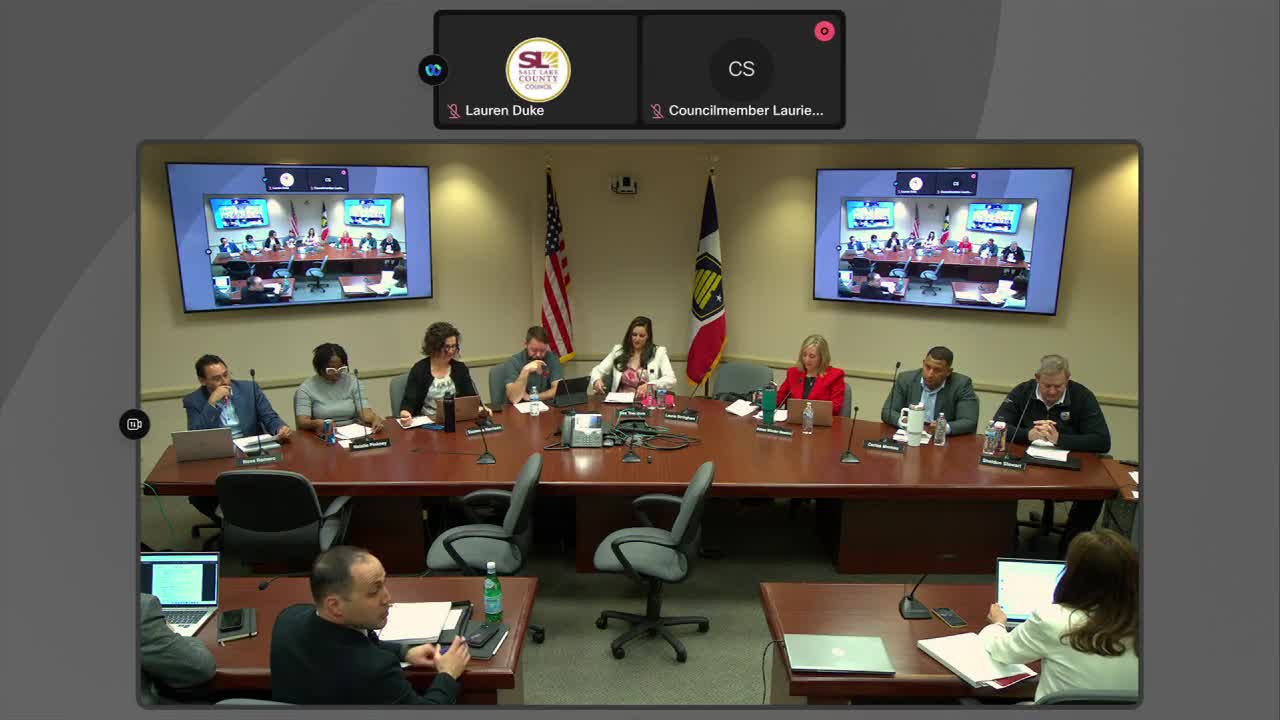
A motion to restore the funding was made and seconded; the council then took a roll call vote. The final tally recorded by the clerk was: Council Member Moreno — yes; Council Member Stewart — yes; Chair Theodore — yes; Council Members Pinkney, Bradshaw, Stringham, Winder Newton and Romero — no. The motion failed, 3–5.
Council members and county staff said the immediate next steps are to implement the facilitator process and to continue budget and schedule coordination with UFA so the agency can finalize its July–June fiscal-year budget. Several council members urged the facilitator discussions to address: (1) whether and how the county should be treated similarly to other UFA partners; (2) revenue options in canyon and resort areas; and (3) a durable governance compact that prevents recurring year-to-year budget disputes.
Speakers and attendees quoted or referenced in this report spoke during the council’s agenda item 8.6 discussion on April 15, 2025.
Ending: Council leaders said they expect the facilitator-led talks to produce recommendations before the next major UFA budget decisions and that the county will maintain its current budget posture until the facilitated process concludes.